Responsible Gambling in UK Horse Racing – Data, Tools, and Warning Signs
 Available in US
A few years back, I caught myself doing something I’d always told other people not to do. I’d lost three bets on a Saturday afternoon and, instead of walking away, I deposited again and backed two horses in the last race at inflated stakes to try to recover the day. Neither won. I sat there afterwards, not because of the money – it was within my means – but because the pattern was unmistakable. I’d chased losses. Me, the person who writes about betting strategy. It was a sharp reminder that nobody is immune to the emotional pull that makes gambling risky, and that awareness without tools is just awareness.
What the Data Shows – Problem Gambling Rates in UK Racing
The scale of problem gambling in the UK is often exaggerated in media coverage and underestimated in industry messaging. The actual figure, from the most rigorous surveys available, is that 0.4% of the adult population – roughly 300,000 people – experience problems with gambling. Grainne Hurst, CEO of the Betting and Gaming Council, put it directly before the Treasury Select Committee: “I think there are people who will have problems with their gambling, but that is 0.4% of the population.”
Among horse racing bettors specifically, the rate is higher. The Health Survey for England, using PGSI and DSM-IV screening tools, found a problem gambling rate of 2.8% among those who bet on horse racing – below the average for the gambling industry overall, but still significantly above the general population rate. This means that in any group of thirty-five regular racing punters, roughly one is likely experiencing gambling-related harm.
These numbers don’t capture the full picture. Between the 0.4% experiencing clinical-level problems and the majority who gamble without any issues, there’s a larger group – estimated at 3-5% of the adult population – who experience some degree of gambling-related harm without meeting the threshold for “problem gambling.” They might be spending more than they intended, hiding their activity from a partner, or feeling anxious about their betting. This is the group that responsible gambling tools are most likely to help, because their behaviour is shifting but hasn’t yet become entrenched.
Warning Signs That Betting Has Stopped Being Fun
Nearly half of UK adults – 48% – participate in some form of gambling, and for the vast majority, it’s entertainment that fits comfortably within their lives. The transition from enjoyable recreation to something more problematic is rarely dramatic. It happens gradually, through patterns that feel normal until they’re not.
The signs I’ve learned to watch for – in myself and in the people I bet alongside – are behavioural rather than financial. Spending more time thinking about betting than actually enjoying it. Feeling restless or irritable when not betting. Betting on races you have no interest in, just to have something on. Increasing stakes to recapture the excitement of earlier wins. Lying to family or friends about how much you’ve wagered or lost. Returning to bet with the specific intention of winning back money lost on a previous occasion.
The financial indicators are more obvious but often appear later: spending beyond your allocated budget, depositing money that was earmarked for bills or savings, borrowing to fund betting, or withdrawing winnings and immediately reinvesting them rather than taking profit. If any of these sound familiar, they’re worth taking seriously – not as a diagnosis, but as a prompt to step back and evaluate honestly.
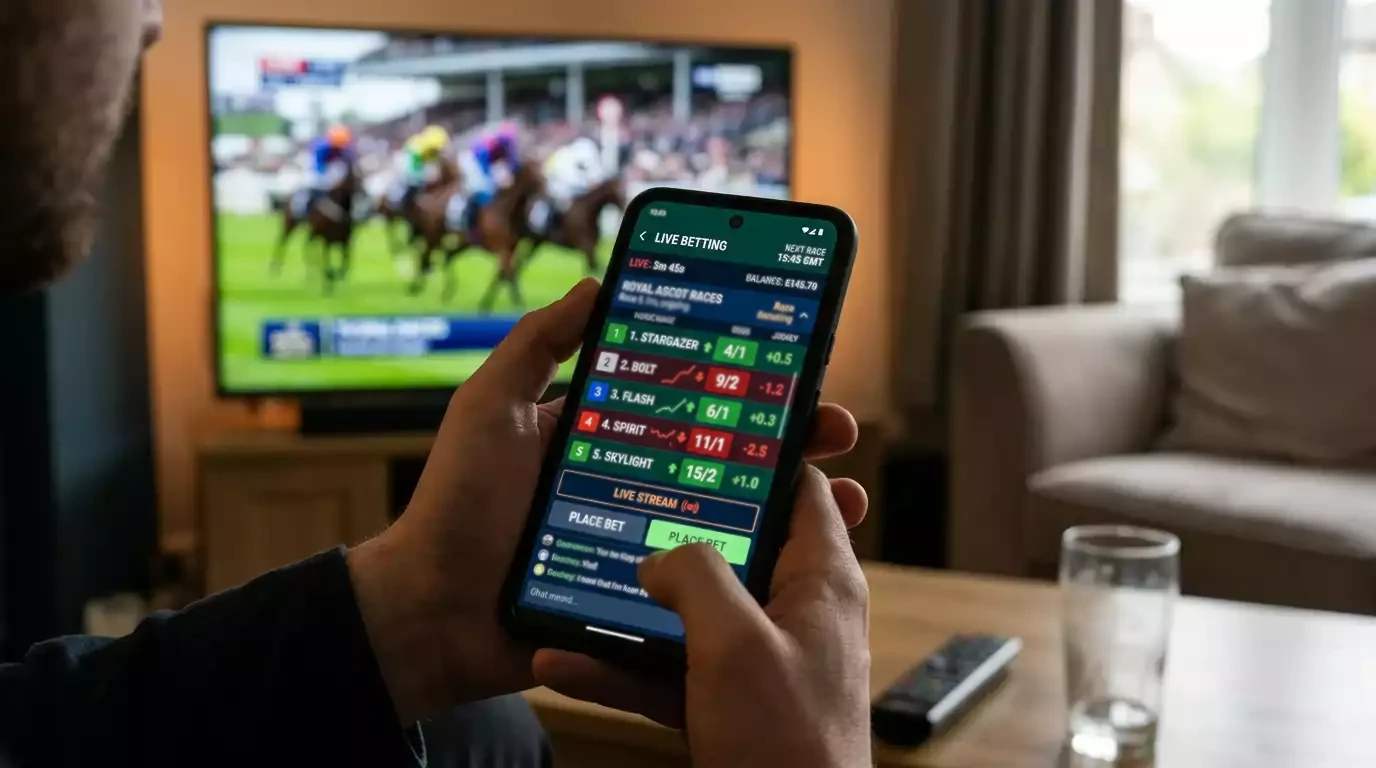
One pattern specific to horse racing is the “next race” trap. Because race meetings run throughout the day with events every 20-30 minutes, there’s always another race about to start. The continuous availability makes it easy to slip from watching one race you’ve bet on into chasing a loss through the remainder of the card. The sport’s structure – relentless, sequential, immediately accessible – is part of what makes it enjoyable, but also part of what makes boundaries important.
Practical Tools for Keeping Horse Racing Betting in Check
Every UKGC-licensed operator provides responsible gambling tools, and using them isn’t a sign of weakness – it’s a sign that you’re treating betting as a managed activity rather than an uncontrolled habit. The most effective tools are the ones you set up before you need them.
Deposit limits are the frontline. Set a weekly or monthly maximum deposit that aligns with your disposable income – money you can lose without affecting your living standards. The limit enforces the boundary automatically, removing the need for willpower in the moment. Most operators also offer loss limits, which cap the amount you can lose over a period regardless of deposits and withdrawals.
Time limits and reality checks work on the attention axis rather than the financial one. A notification reminding you that you’ve been logged in for two hours can break the hypnotic pattern of race after race. Session time limits force you to log out after a set duration, creating a natural pause that lets you reassess whether you want to continue.
Self-exclusion – either from individual operators or across all UKGC-licensed sites via GAMSTOP – is the strongest tool available. It’s designed for situations where lighter-touch measures aren’t sufficient, and it provides a clean break from betting for a minimum of six months. The cooling-off period is mandatory and cannot be reversed early, which is exactly the point.
Beyond the operator tools, personal strategies matter. Keep a betting record – not just wins and losses but stakes, deposit history, and time spent. The data cuts through the natural tendency to remember wins and forget losses. Set a session budget for each betting day and stop when it’s gone, regardless of how many races are left. Never bet money that’s allocated for something else. These aren’t rules imposed by a regulator – they’re the framework that any sensible punter builds for themselves.
Where to Get Support if You Need It
If you recognise the warning signs in your own behaviour, support is available and confidential. GamCare offers free advice, counselling, and support for anyone affected by gambling through its helpline and online chat. The National Gambling Helpline operates daily for anyone who wants to talk about their gambling or that of someone close to them. Gamblers Anonymous runs peer support meetings across the UK.
For horse racing specifically, the racing industry’s welfare charities – including Racing Welfare and the Racing Foundation – provide support to people connected to the sport who are experiencing gambling-related harm. These organisations understand the unique culture of racing and the role that betting plays within it, which can make it easier to engage with support than approaching a generic gambling helpline.
Asking for help isn’t a failure. It’s the most rational decision you can make when you recognise that your relationship with betting has shifted from enjoyable to harmful. The 0.4% figure for problem gambling represents real people, and behind each statistic is someone who started out exactly where every punter starts: placing a bet because it seemed like fun.
What is the PGSI score and how do I take the test?
The Problem Gambling Severity Index is a nine-question self-assessment tool used to screen for gambling-related harm. Each question is scored from 0 to 3, giving a total score of 0-27. A score of 0 indicates non-problem gambling, 1-2 is low risk, 3-7 is moderate risk, and 8 or above indicates problem gambling. The PGSI is available online through GamCare and other responsible gambling organisations. It takes about five minutes to complete.
Is horse racing betting more addictive than other forms of gambling?
Research does not support the claim that horse racing betting is inherently more addictive than other forms of gambling. The problem gambling rate among horse racing bettors is 2.8%, which is below the industry average. However, horse racing’s continuous availability – races every 20-30 minutes throughout the day – and the ease of placing bets via mobile apps create environmental factors that can contribute to excessive play for vulnerable individuals. The form of gambling matters less than the individual’s relationship with it.
Prepared by the Horse Racing Game Betting editorial staff.