Ante-Post Betting in Horse Racing – Early Prices, Risks, and Value Windows
 Available in US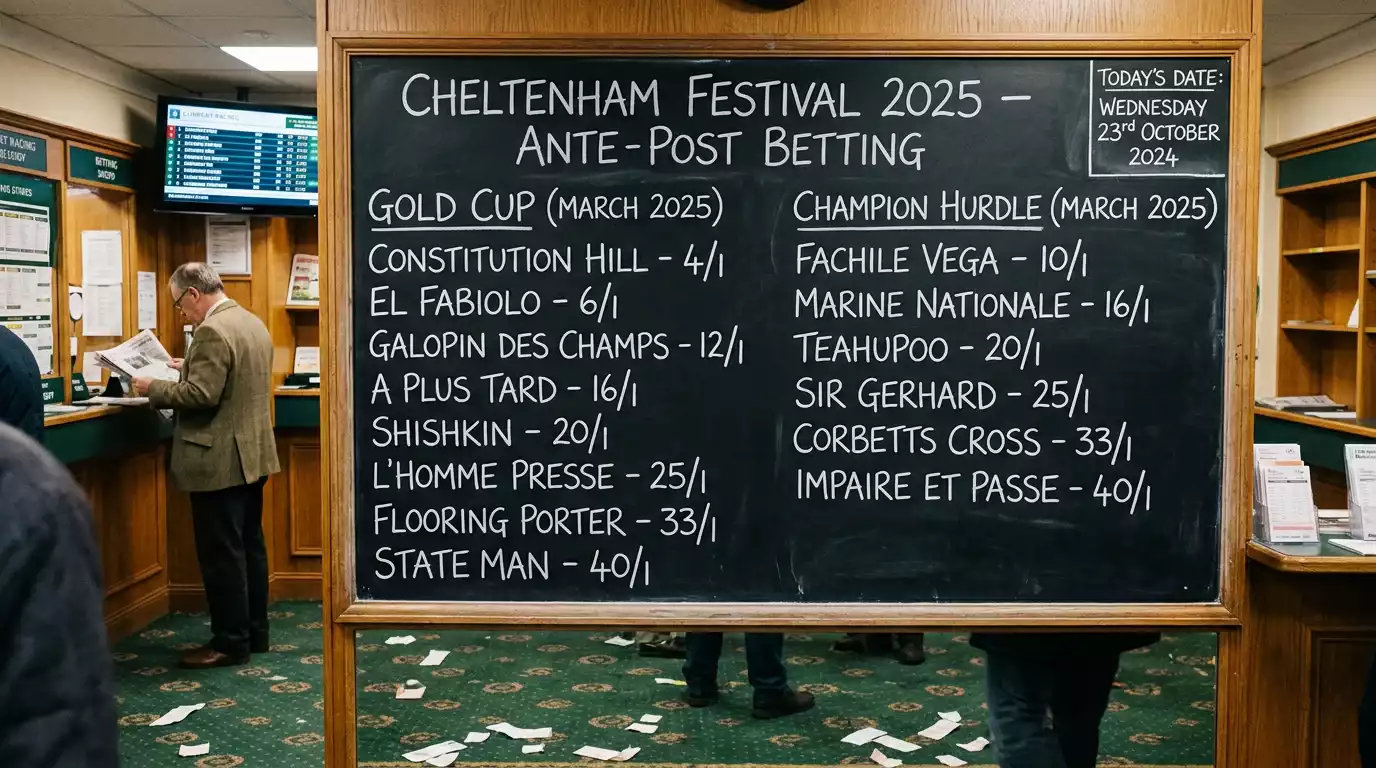
In November 2022, I backed a horse for the Champion Hurdle at 16/1. By the time March came around, the same horse was 3/1 favourite. That price compression – from 16/1 to 3/1 over four months – represents the entire promise and peril of ante-post betting in a single wager. The horse won, and the difference between my GBP160 return per tenner and the GBP30 that late backers collected was the reward for taking risk months in advance.
Ante-post betting is where the biggest value in horse racing lives, but it comes with a catch that transforms the entire bet: if your horse doesn’t run, you lose your stake. No refund, no void, no second chances. That single rule changes everything about how you should approach it.
What Ante-Post Means and How the Rules Differ
Walk into any betting shop the morning of a big race and the prices on the board are “day-of-race” prices – if your horse is withdrawn, you get your money back. Ante-post is a different contract entirely. You’re betting before the final declarations are made, sometimes weeks or months ahead, and the bookmaker gives you bigger odds in exchange for you accepting the non-runner risk.
The cut-off point varies by race. For most UK races, ante-post rules apply until the day before the event, when final declarations close. For the Grand National, Cheltenham Festival, and Royal Ascot, ante-post markets open months in advance. The moment the final field is confirmed and day-of-race betting begins, ante-post rules no longer apply and standard withdrawal procedures (Rule 4 deductions) kick in instead.
There’s no grey area in the terms: if you bet ante-post and your horse is balloted out, injured, retired, or simply doesn’t get entered, your stake is gone. I’ve lost count of the ante-post bets I’ve had on horses that never made it to the racecourse. It’s the price of admission to early markets, and you need to factor it into your staking plan from the start.
One nuance worth knowing: ante-post bets are settled at the odds you took, regardless of where the price moves afterwards. If you back a horse at 20/1 in December and it drifts to 33/1 by race day, your bet still pays at 20/1. Conversely, if it shortens to 5/2, you’ve locked in value that no longer exists in the market.
Non-Runner Risk – The Price You Pay for Early Value
The question I get asked most about ante-post betting is “how often do horses actually get withdrawn?” The honest answer is: more often than you’d like. In my records across the last eight years, roughly one in five ante-post selections for major festivals didn’t make the race. For the Grand National specifically, where 40 runners are whittled down from a much larger entry, the attrition rate is even higher.
Injuries are the primary culprit, especially in National Hunt racing where the training demands are punishing. A horse can be in sparkling form in January, pick up a tendon injury in February, and miss the entire festival season. Trainers also change plans – a horse aimed at the Champion Hurdle might be rerouted to the Stayers’ Hurdle if its work at home suggests it wants further. Your ante-post bet on the Champion Hurdle is dead even though the horse is running at the same meeting.
Ground conditions create another layer of risk. Some trainers will withdraw a horse if the going turns against it. A firm-ground specialist entered for Royal Ascot might be pulled if the heavens open the week before. You can mitigate this by focusing on versatile horses with form across multiple ground conditions, but you can’t eliminate it.
The financial reality of non-runner risk means your ante-post strike rate needs to be significantly higher than your day-of-race strike rate for the strategy to work. The enhanced odds need to more than compensate for the dead money you’ll accumulate on withdrawn horses. In my experience, the break-even point sits at roughly one non-runner for every three or four ante-post bets placed.
NRNB Offers and How They Change the Equation
Non-Runner No Bet – NRNB – is the bookmaker’s answer to the biggest objection punters have about ante-post betting. With NRNB, if your horse doesn’t run, your stake is returned. It sounds like the perfect solution, and in some cases it is. But the cost is built into the price.
NRNB odds are always shorter than standard ante-post odds. A horse that’s 16/1 in the standard ante-post market might be 10/1 or 12/1 with NRNB. The bookmaker is pricing in the probability of withdrawal and passing that cost to you through reduced odds. Whether the trade-off is worth it depends on the specific horse and race.
For horses with a strong chance of withdrawal – perhaps they have a history of minor setbacks, or the trainer is known for being cautious about ground conditions – NRNB can represent better expected value despite the shorter price. For rock-solid entries from top yards with clean injury records, standard ante-post odds usually offer more value because the probability of withdrawal is low enough that the enhanced price more than compensates.
I use NRNB selectively: for my strongest fancies where the NRNB price still represents value against my assessment, and for National Hunt horses that run on extreme ground where the withdrawal risk is elevated. For Flat racing entries at the big summer meetings, where the ground is more predictable and training regimes are less physically demanding, I’ll usually take the standard ante-post price and accept the risk.
Timing Your Ante-Post Bets – Where the Value Sits
Not all ante-post value is created equal, and the timing of your bet matters as much as the selection. Racecourse attendance topped 5.031 million in 2025 – a figure that reflects growing public interest in the sport and, consequently, growing liquidity in ante-post markets as casual fans pile in closer to the big events.
The most generous ante-post prices typically appear in two windows. The first opens immediately after the previous year’s equivalent event. Cheltenham Gold Cup prices for next March are at their loosest in late March and April, right after this year’s festival. Bookmakers are speculating about future form, and the prices reflect maximum uncertainty. The second window opens when trial races start producing results that reshape the market – usually January for Cheltenham, late February for Aintree. If a trial result confirms what you already believed, the price will shorten rapidly and your earlier position looks smart.
The worst time to bet ante-post is the week before a major meeting. By then, the market has absorbed every piece of information – trial form, training reports, ground forecasts, jockey bookings – and the prices closely resemble what you’ll get on race day. You’re paying ante-post risk for day-of-race value, which is the worst of both worlds.
Prize money across UK racing reached GBP194.7 million in 2025, which means top connections are increasingly strategic about where their horses run. Following the patterns of the major yards – who targets what, which trainers have festival horses ready earlier than others – is the closest thing ante-post betting has to an edge. The price moves that matter most happen when a well-regarded trainer makes a public commitment to a specific race for a specific horse. That’s your signal, and it usually compresses within 48 hours of the festival market hearing the news.
Do I lose my stake if an ante-post selection is withdrawn?
Yes. Under standard ante-post rules, if your horse does not run for any reason – injury, change of plan, balloting, or retirement – your stake is lost. There is no refund. The only exception is if you specifically placed a Non-Runner No Bet wager, in which case your stake is returned if the horse is withdrawn.
Is ante-post betting available each way?
Yes, most bookmakers offer each way ante-post betting on major races, though the place terms and number of places may differ from day-of-race terms. Check the specific terms offered, as some operators restrict each way ante-post to races with a minimum number of expected runners. The same non-runner risk applies to both the win and place portions of your each way ante-post bet.
Published by the Horse Racing Game Betting team.