UK Horse Racing Events Betting – Festival-by-Festival Punting Guide
 Available in US
The first time I walked into Prestbury Park on Champions Day at Cheltenham, I understood why people call it the Olympics of jump racing. The noise, the atmosphere, the quality of the horses – and the sheer volume of money flowing through the betting ring. UK horse racing events are not just fixtures on a calendar. They are the heartbeat of the sport, and for punters, they are the moments when the biggest markets, the deepest liquidity, and the best betting opportunities converge.
Racecourse attendance across Britain topped 5.031 million in 2025 – the first time it exceeded five million since before the pandemic, a 4.8% increase on the previous year. That growth was driven largely by the festivals: Cheltenham in March, the Grand National meeting at Aintree in April, Royal Ascot in June, and the summer circuit that runs through Glorious Goodwood, York’s Ebor meeting, and into the autumn. Each event has its own character, its own betting dynamics, and its own set of strategic considerations that differ from everyday racing. This is the festival-by-festival punting guide I wish I had when I started, and it sits alongside the broader UK horse racing betting guide as the event-specific playbook.
Table of Contents
- Cheltenham Festival – Four Days That Define National Hunt
- The Grand National – Betting on the World’s Most Famous Race
- Royal Ascot – Five Days of World-Class Flat Racing
- The Classics – Guineas, Derby, Oaks, and St Leger
- Glorious Goodwood, York’s Ebor, and the Summer Betting Calendar
- Ante-Post Betting on Festivals – Risk, Reward, and Timing
- Racing Events FAQ
Cheltenham Festival – Four Days That Define National Hunt
Cheltenham is where reputations are made and destroyed in four days. I have seen ante-post certainties pulled up at the second last and 33/1 outsiders storming up the hill to win Grade 1s. No other meeting in the National Hunt calendar combines this intensity of competition with this depth of betting activity, and the numbers reflect it – betting participation in the UK peaks at 7% of the adult population during the March-to-July window that Cheltenham opens.
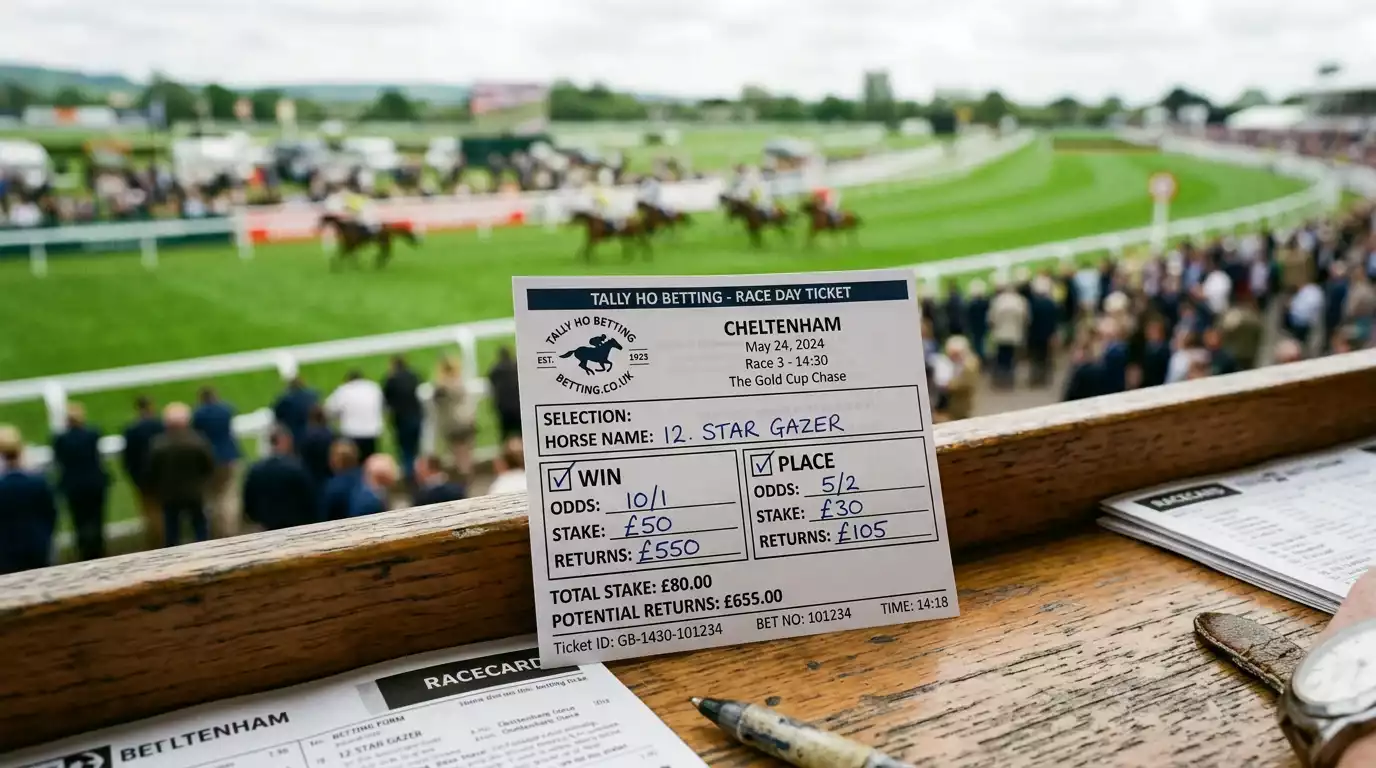
The Festival runs Tuesday through Friday in the third week of March, with seven races each day – 28 races in total across the meeting. The feature events define their respective days. Tuesday opens with the Supreme Novices’ Hurdle and builds toward the Champion Hurdle, the division’s championship race over two miles. Wednesday’s centrepiece is the Queen Mother Champion Chase, the two-mile chasing crown. Thursday – traditionally called St Patrick’s Day at the meeting – peaks with the Stayers’ Hurdle over three miles. And Friday is Gold Cup day, the blue riband event of jump racing, run over three miles two and a half furlongs of stamina-sapping Cheltenham terrain.
What makes Cheltenham unique as a betting event is the course itself. The undulating left-handed track, with its famous uphill finish, produces a specific type of winner. Speed alone is not enough – horses need stamina for the hill, jumping accuracy for the demanding fences, and the temperament to handle the roaring crowd. This is why course form at Cheltenham is more predictive than at almost any other track. A horse that has won at the Festival before has proven it handles the unique demands, and that proven ability is reflected in the betting market – though not always fully.
The ante-post market for Cheltenham opens months in advance, with prices available from the previous autumn. Serious punters identify potential Festival horses during the early-season action at tracks like Newbury, Ascot, and Sandown, backing them before the market tightens. By the time the final declarations are made, the prices on leading contenders have often halved. The value window is narrow and closes fast, but the rewards for getting in early on a Cheltenham winner at 16/1 that goes off at 5/1 are substantial.
My Cheltenham approach centres on three principles: respect course form above all other form, be cautious of Irish raiders in handicaps (they dominate the graded races but are less reliable in big-field handicaps), and never bet in the first race of the meeting without strong conviction – the Supreme Novices’ is traditionally one of the most unpredictable races of the week, and starting the Festival with a loss sets a dangerous emotional tone for the days ahead.
The Grand National – Betting on the World’s Most Famous Race
No other race in the world turns 48% of British adults into temporary punters. The Grand National is not just a horse race – it is a national event, a cultural fixture, and for millions of people, the only bet they place all year. Racing and betting share an interdependency stretching back over two centuries, and the Grand National is where that relationship is most visible, most celebrated, and most analysed.
Run at Aintree in early April over four miles and two and a half furlongs, the Grand National features up to 40 runners navigating 30 of the most demanding fences in racing, including the infamous Becher’s Brook, the Canal Turn, and The Chair. The sheer scale of the field and the severity of the obstacles make this the most unpredictable race on the calendar. Favourites have a poor record – the market leader wins far less frequently than the 33% average for favourites across all racing. This unpredictability is what makes it compelling for casual punters and terrifying for serious ones.
Each way betting is the default strategy for the Grand National, and with good reason. In a 40-runner handicap, bookmakers typically pay four places – some extend to five or six as a promotional offer. At those terms, backing a 25/1 or 33/1 shot each way gives you a realistic chance of a return even if your horse does not win. The place fraction on longer-priced runners in a field this large produces meaningful payouts on the place part alone – a 33/1 shot at quarter the odds for a place returns 8.25/1, which is a solid each way return from a horse finishing fourth.
Form analysis for the Grand National requires different lenses than a standard handicap chase. Stamina is paramount – a horse that has not proven it stays beyond three miles is a risky proposition over four and a quarter. Jumping ability at speed is non-negotiable – the Aintree fences are unique, and horses that have never seen them are statistically less likely to complete the course. Weight matters too – the winner typically carries between 10st 4lb and 11st, with very few exceptions at the top of the weights or the bottom.
The ante-post market for the Grand National is active from the previous autumn, and the best prices are available months before the race. The risk of non-runners is high – the final field of 40 is selected from a longer list of entries, and many horses are balloted out or withdrawn as connections assess the ground and opposition. Ante-post backers at long odds accept this risk for the potential reward of locking in a price three or four times longer than what the horse will be on the day.
Royal Ascot – Five Days of World-Class Flat Racing
If Cheltenham is the Olympics of jumping, Royal Ascot is the World Cup of the Flat. Five days in late June, thirty races, international runners from half a dozen countries, and a betting turnover that dwarfs any other Flat meeting in the UK calendar. It is also, in my experience, one of the hardest meetings to make a profit at – and here is why.
The quality of the fields at Royal Ascot is unmatched. The Gold Cup over two and a half miles, the King’s Stand Stakes over five furlongs, the Queen Anne over a mile – these are Group 1 races that attract the best horses trained in Britain, Ireland, France, Japan, and Australia. When the world’s elite converge, form from domestic racing only tells part of the story. A horse that looked outstanding winning a Listed race at Newmarket might meet a French-trained runner with a comparable profile and superior turn of foot. The international element adds a layer of uncertainty that purely domestic meetings do not have.
Draw bias at Ascot is a serious factor, particularly in the big handicaps. The straight course favours high draws in certain conditions, and the round course produces its own positional biases depending on the going and the placement of the running rail. Ignoring the draw at Royal Ascot is like ignoring the going at Cheltenham – you are removing a known variable from your analysis and hoping it does not matter. It does.
The handicaps at Royal Ascot are where most punters focus their attention, and rightly so. The Royal Hunt Cup, the Wokingham, the Britannia – these are massive field handicaps with 20+ runners, offering the kind of each way value that smaller meetings cannot match. The challenge is that every form student in the country is studying the same data, which means genuine value is harder to find. The edge tends to come from non-obvious factors: a horse drawn on the favoured side, a trainer with an exceptional Royal Ascot record in a specific race, or an improving three-year-old meeting older horses for the first time with a weight advantage.
I approach Royal Ascot with smaller stakes and higher selectivity than any other meeting. The temptation to bet in every race is enormous – thirty races over five days, each one a spectacle – but the margins are tighter because the market is sharper. I typically bet in six or seven races across the week and watch the rest. Restraint at Ascot is not conservative – it is survival.
The Classics – Guineas, Derby, Oaks, and St Leger
The five Classics are the oldest and most prestigious races in Flat racing, and they carry a weight of history that no other set of races can match. The 2,000 Guineas and 1,000 Guineas at Newmarket in the spring, the Derby and the Oaks at Epsom in early June, and the St Leger at Doncaster in September – these races have been shaping the thoroughbred breed and the betting market for over two centuries.
Total prize money across British racing reached 194.7 million pounds in 2025, a 3.5% increase on the previous year, and the Classics receive a substantial share. That prize money attracts the best three-year-olds from the most powerful stables, making these the most competitive single-age-group races of the season. For punters, the Classics present a specific challenge: the horses are young, often lightly raced, and their form profile is still developing. Unlike a handicap featuring proven older horses with 30 runs on their record, a Classic contender might have raced only three or four times.
Trial races – the Craven Stakes, the Dante, the Lingfield Derby Trial – are the key form pointers. Horses that perform well in recognised trials tend to be better prepared physically and tactically for the demands of the Classics themselves. The Dante at York, run over ten and a half furlongs in May, has produced more Derby winners than any other trial, and the market respects it accordingly. A Dante winner will typically shorten in the Derby ante-post market within minutes of crossing the line.
Epsom is a unique track that punishes certain types of horse. The steep downhill run into Tattenham Corner, followed by a sharp left turn and an uphill finish over the final furlong, requires balance, agility, and temperament. Big, heavy-topped colts that gallop on a straight line often struggle, while nimble, well-balanced types handle it naturally. Studying how a horse moves – its action, its balance at speed – is as important at Epsom as studying its form figures.
The St Leger, the final Classic of the season, has lost some of its commercial lustre in recent decades as breeders prioritise speed over stamina. But as a betting event, it retains value precisely because it attracts less market attention. The ante-post market is thinner, the form analysis less crowded, and the prices can be generous on horses stepping up to the mile-and-three-quarter trip for the first time. I have had some of my best ante-post results in the Leger, precisely because it flies under the radar.
Glorious Goodwood, York’s Ebor, and the Summer Betting Calendar
Once Royal Ascot ends, the Flat season opens up into a series of high-quality meetings that do not carry the same public profile but offer outstanding betting value. Glorious Goodwood in late July, York’s Ebor meeting in August, and the autumn programme building toward Champions Day at Ascot in October – this stretch is where I do the bulk of my Flat season betting.
Goodwood’s quirky track – undulating, with a pronounced camber – produces results that confound formbook logic. Horses that act on the unique terrain have an advantage, and course form is heavily weighted by the market. The Stewards’ Cup, a six-furlong cavalry charge with 25+ runners, is one of the season’s great betting puzzles – a handicap so competitive that wide-open markets and generous each way terms make it a favourite among serious punters.
York’s Ebor meeting is the Flat punter’s equivalent of Cheltenham. The quality of racing is second only to Royal Ascot on the Flat calendar, the track is one of the fairest in Britain with minimal draw bias over middle distances, and the feature handicap – the Ebor itself, over a mile and three-quarters – regularly attracts 20+ runners at prices that reward patient ante-post work. The Nunthorpe Stakes, the five-furlong sprint showpiece, and the International Stakes over ten and a half furlongs provide Group 1 action for those who prefer the top level.
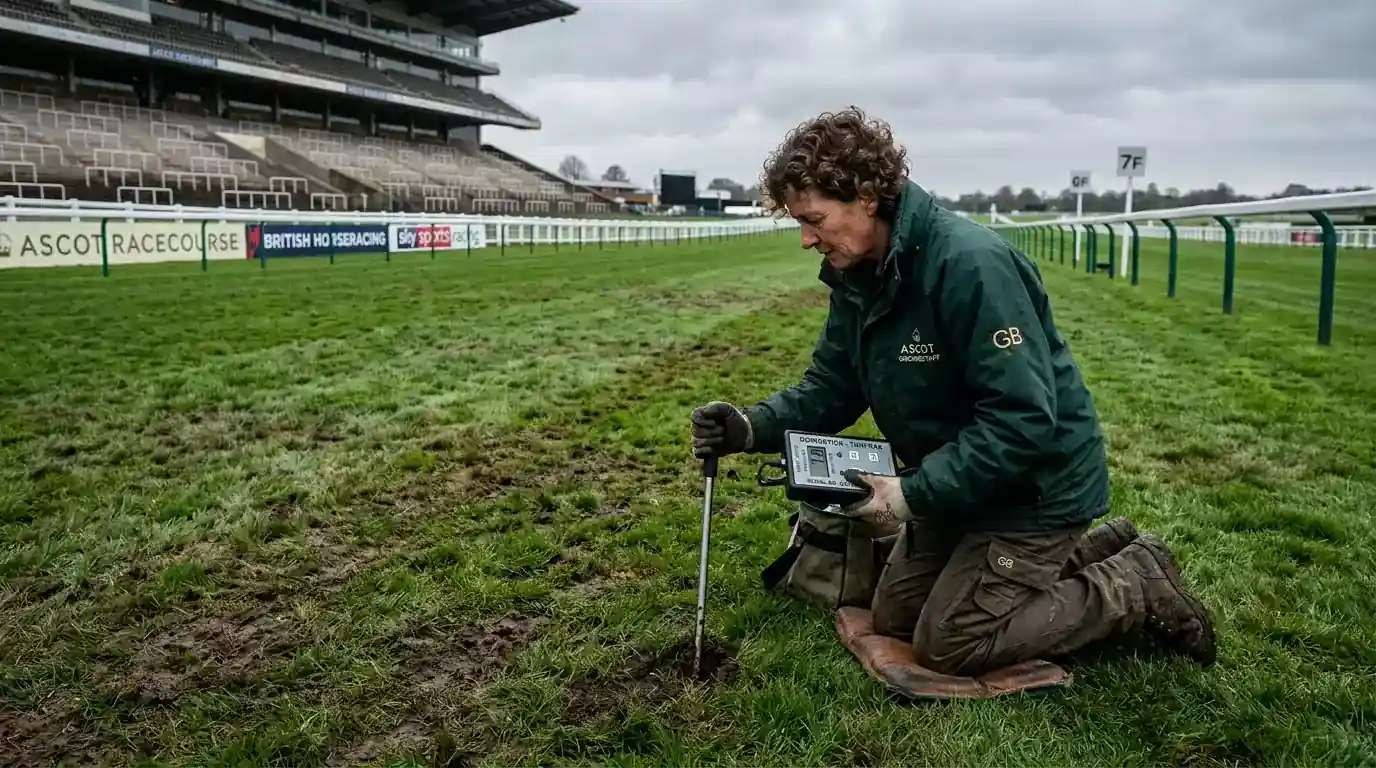
Champions Day at Ascot in mid-October closes the domestic Flat season with four Group 1 races on a single card. The ground is often soft by October, which reshuffles the form compared to the summer, and the clash of generations – three-year-olds meeting seasoned older horses for the final time – adds another layer of complexity. It is a meeting that rewards the punter who has tracked form all season long, because the patterns established through the summer reach their conclusion here.
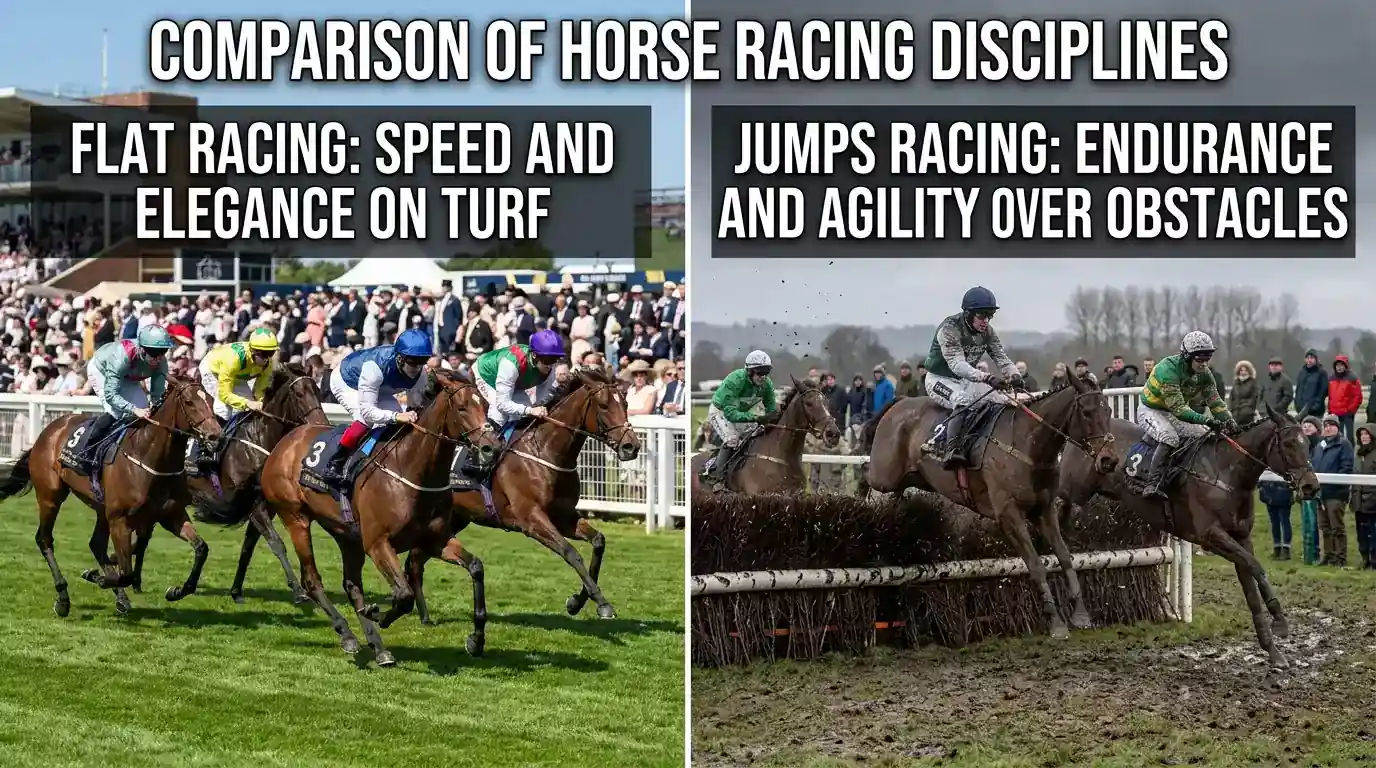
The National Hunt season returns in earnest in November, and the transition period between the two codes – September and October – is when dual-purpose yards often produce surprise winners as horses switch between Flat and Jumps. Trainers who operate across both codes sometimes place horses in end-of-season Flat races that the market underestimates, and spotting these runners before the market catches on is one of the more enjoyable edges in the autumn calendar.
Ante-Post Betting on Festivals – Risk, Reward, and Timing
David Hunter, speaking about the financial pressures on racecourses, made a point that resonates with punters too: media rights are by far the biggest income stream, and if less money flows in, the entire ecosystem contracts. For punters, the equivalent observation is that ante-post betting is where the biggest prices exist, and if you never engage with ante-post markets, you are permanently accepting shorter odds than necessary.
Ante-post value is highest when uncertainty is greatest – months before a race, when the field is not finalised, the going is unknown, and the trial season has not yet sorted contenders from pretenders. A horse might be 20/1 for the Gold Cup in November. If it wins its prep race in January and its trial in February, it could be 5/1 by the time March arrives. The punter who backed it in November captured 20/1. The one who waited for confirmation captured 5/1. The difference is the premium for accepting non-runner risk early.
That non-runner risk is real. Ante-post bets are void only if the race itself is abandoned – if your horse does not run, your stake is lost. Injuries, changes of plan, unsuitable going declared close to race day – all of these can eliminate your selection without any refund. Over the years I have estimated that roughly one in five of my ante-post selections does not make the start. The other four have to deliver enough profit at the longer odds to compensate for the losses on the non-runners. They do, but only because the price differential is consistently large enough.
Timing matters within the ante-post window itself. Backing a Cheltenham contender in October gives the longest odds but carries the most risk – four months of potential injury or form loss. Backing the same horse in January, after one successful prep run, gives shorter odds but significantly reduced risk. I split my ante-post activity into two windows: an early strike at the longest prices on horses I rate highly, and a confirmation bet after key trials if the horse has performed and the price still represents value. This two-stage approach balances risk and reward more effectively than a single early bet or a single late one.
The festivals are the natural home of ante-post betting because the major races are fixed in the calendar, the fields are predictable, and the market is liquid enough to support serious stakes. Cheltenham, the Grand National, Royal Ascot, and the Classics all have active ante-post markets months in advance. Midweek handicaps at minor meetings do not – the fields are too variable and the prices too thin. Ante-post is a festival strategy, and combining it with sound staking and value principles is how the best punters approach the biggest weeks of the year.
Racing Events FAQ
When is the best time to place an ante-post bet on the Grand National?
The best ante-post value is typically available in the autumn and winter, when prices are longest and the final field is far from confirmed. A second window opens after the key trial races in February and March, when you have more form evidence but shorter odds. Backing in stages – a small early bet at long odds and a follow-up after trials – balances risk and reward effectively.
How many races are there at the Cheltenham Festival?
The Cheltenham Festival features 28 races across four days, with seven races per day. Each day is built around a feature championship race: the Champion Hurdle on Tuesday, the Queen Mother Champion Chase on Wednesday, the Stayers’ Hurdle on Thursday, and the Cheltenham Gold Cup on Friday.
What is the difference between a Group 1 and a Grade 1 race?
Group 1 and Grade 1 both designate the highest classification of race, but they apply to different codes. Group 1 is used for Flat racing and Grade 1 for National Hunt (jump racing). The quality level is equivalent – both represent the pinnacle of their respective codes – but the terminology distinguishes between the two disciplines.
Created by the ”Horse Racing Game Betting” editorial team.