Horse Racing Going Explained – Every Ground Condition from Firm to Heavy
 Available in US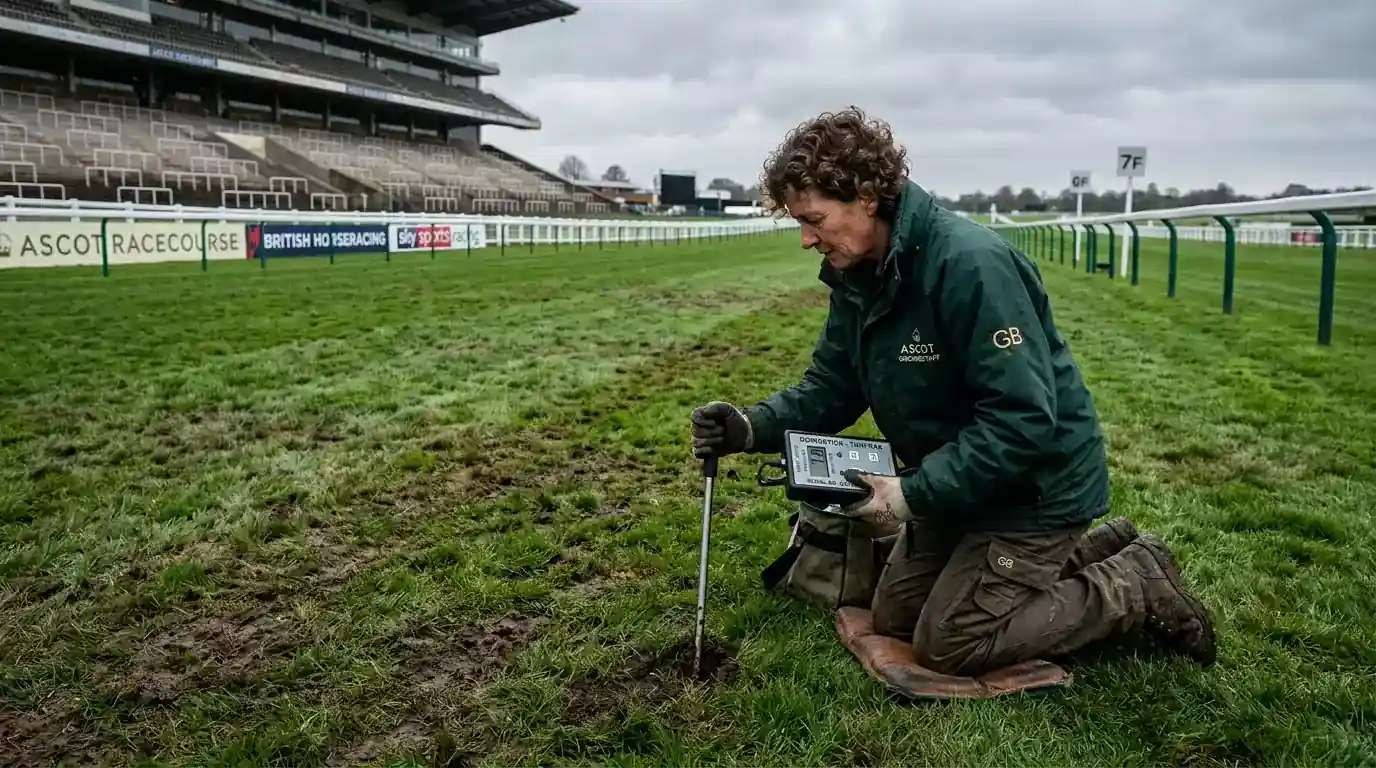
I once backed a horse at Haydock that had won its last four races on good ground. The going on race morning was described as “good to soft.” I figured that was close enough. The horse finished tailed off, beaten twenty lengths, and the jockey’s post-race comment was blunt: “Hated the ground.” That single word – “ground” – cost me a winning run, and it taught me that in UK horse racing, the going isn’t background detail. It’s the single most influential variable in the outcome of a race after the ability of the horses themselves.
The Official Going Scale – From Hard to Heavy
The going describes the condition of the racing surface, and across the UK’s 59 licensed racecourses, it’s assessed before every meeting by the clerk of the course. The official scale runs from the driest to the wettest conditions, and each description corresponds to a materially different racing surface.
On turf – where the majority of British racing takes place – the scale reads: Hard, Firm, Good to Firm, Good, Good to Soft, Soft, Heavy. “Hard” ground is baked dry, usually only seen in prolonged summer heatwaves, and it’s rare enough that many jockeys dislike riding on it due to the jarring impact. “Firm” is fast, dry ground that favours horses with a quick, economical action. “Good to Firm” is the most common summer going and is generally the ideal surface for Flat racing – fast enough to reward speed but with enough give to protect joints.
“Good” is the goldilocks condition that suits the widest range of horses. “Good to Soft” introduces moisture that slows the ground and tests a horse’s stamina more than its speed. “Soft” ground demands genuine stamina and a different running style – horses need to pick their feet up out of the surface rather than skimming across it. “Heavy” is waterlogged ground that turns a race into a war of attrition, where only horses that genuinely handle deep conditions can compete.
All-weather tracks – Lingfield, Wolverhampton, Chelmsford, Newcastle, Kempton, Southwell – use artificial surfaces and have their own going scale: Fast, Standard to Fast, Standard, Standard to Slow, Slow. The variation is less extreme than turf, but it still matters. The 21,728 horses in training across the UK run on a variety of surfaces, and a horse’s ground preference is as fundamental as its distance preference.
GoingStick Readings and How Clerks of the Course Measure Ground
For years, the going was assessed by a clerk walking the course in wellington boots and using judgement honed by experience. That subjective approach still plays a role, but it’s now supplemented by the GoingStick – a penetrometer that measures the moisture content and firmness of the turf at multiple points around the track.
The GoingStick produces a numerical reading that correlates with the verbal going descriptions. Readings above 8.0 typically indicate good to firm or firmer ground. Between 6.0 and 8.0 sits good ground. From 4.5 to 6.0, the ground is good to soft. Below 4.5, you’re into soft territory, and readings under 3.0 indicate heavy going. These numbers are published alongside the verbal going description, giving punters a more precise picture than words alone can provide.
The clerk takes GoingStick readings at multiple locations around the course – typically eight to twelve positions on the track. The readings can vary significantly by position. Ground near the rail, where horses have churned up the turf in previous races, is often softer than fresh ground further out. Some clerks publish readings by section (e.g., “home straight 7.2, back straight 6.8”), which adds granular detail that sophisticated punters use to assess how the ground might ride differently at various stages of a race.
How Going Changes During a Meeting and Between Declarations
Here’s what catches out even experienced punters: the going you see when declarations close at 10 a.m. isn’t necessarily the going your horse runs on at 3:30 p.m. Ground conditions change throughout a meeting. Rain during the afternoon softens the ground. Sunshine and wind dry it out. The simple act of horses racing on the turf cuts it up, softening the going progressively through the card – especially on the bends and near the rail where the traffic is heaviest.
Clerks of the course can update the going between races, and these updates are published on the racecourse’s social media channels and on betting industry data feeds. A meeting that starts on good ground can finish on good to soft if afternoon rain arrives. A horse declared to run on good to firm might end up racing on good if the forecast changes.
This dynamic nature of going creates both risk and opportunity. If you’ve identified a horse that loves soft ground and the forecast suggests rain, you might back it at bigger odds in the morning – before the market adjusts to the changed conditions. Conversely, backing a firm-ground specialist in the morning when rain is due is a risk the market will eventually price in, but by then you’re already committed.
Watering is another factor. Clerks routinely water the turf to maintain safe ground conditions and prevent the going becoming too firm. Watering decisions are announced in advance and can shift the going by a full grade – from good to firm to good, for instance. These announcements are publicly available and should be checked as part of your pre-bet analysis.
Identifying Ground Specialists in the Form Book
Some horses are versatile and handle a range of conditions. Others are specialists who only perform on specific ground, and identifying these specialists is one of the most reliable edges in horse racing. The form book tells you everything you need, if you know where to look.
When reading a horse’s form, look for patterns in the going conditions of its wins and good runs. A horse that has won three times on soft or heavy ground and been beaten on good to firm is telling you something unambiguous: it needs cut in the ground to perform. The abbreviation “acts on soft” or “needs good ground” in form commentary confirms what the numbers already show.
Breeding offers additional clues, particularly for horses with limited form. Certain sires produce offspring that consistently handle soft ground – they pass on a running action that copes with the deeper surface. Others throw firm-ground specialists. Trainers know their horses’ ground preferences intimately and will often withdraw a runner if the conditions turn against it, which is why late withdrawals on the morning of a meeting frequently correlate with unexpected changes in the going.
For your own analysis, I’d suggest creating a simple log: every time a horse you’re interested in runs, note the going alongside its finishing position. After four or five runs, the pattern becomes clear. This is far more reliable than any tipster’s opinion, and it’s the kind of work that separates informed punters from casual bettors.
What does Good to Soft mean on a horse racing racecard?
Good to Soft indicates ground that has more moisture than ideal good ground but is not yet genuinely soft. It sits in the middle of the going scale and tests a horse’s stamina slightly more than good ground. Some horses with a preference for faster conditions may underperform on good to soft, while horses that need some give in the ground often improve on it.
Can the going change between the time I place my bet and the race?
Yes. Ground conditions can change throughout a race meeting due to rainfall, sunshine, wind, or watering by the clerk of the course. The going announced at declaration time in the morning may differ from conditions at race time in the afternoon. Clerks publish going updates between races, and these are available on racecourse social media channels and betting data feeds. Always check for updates close to race time.
Written by the editors at Horse Racing Game Betting.