Horse Racing Betting Deposit Limits in the UK – Tools, Thresholds, and Self-Exclusion
 Available in US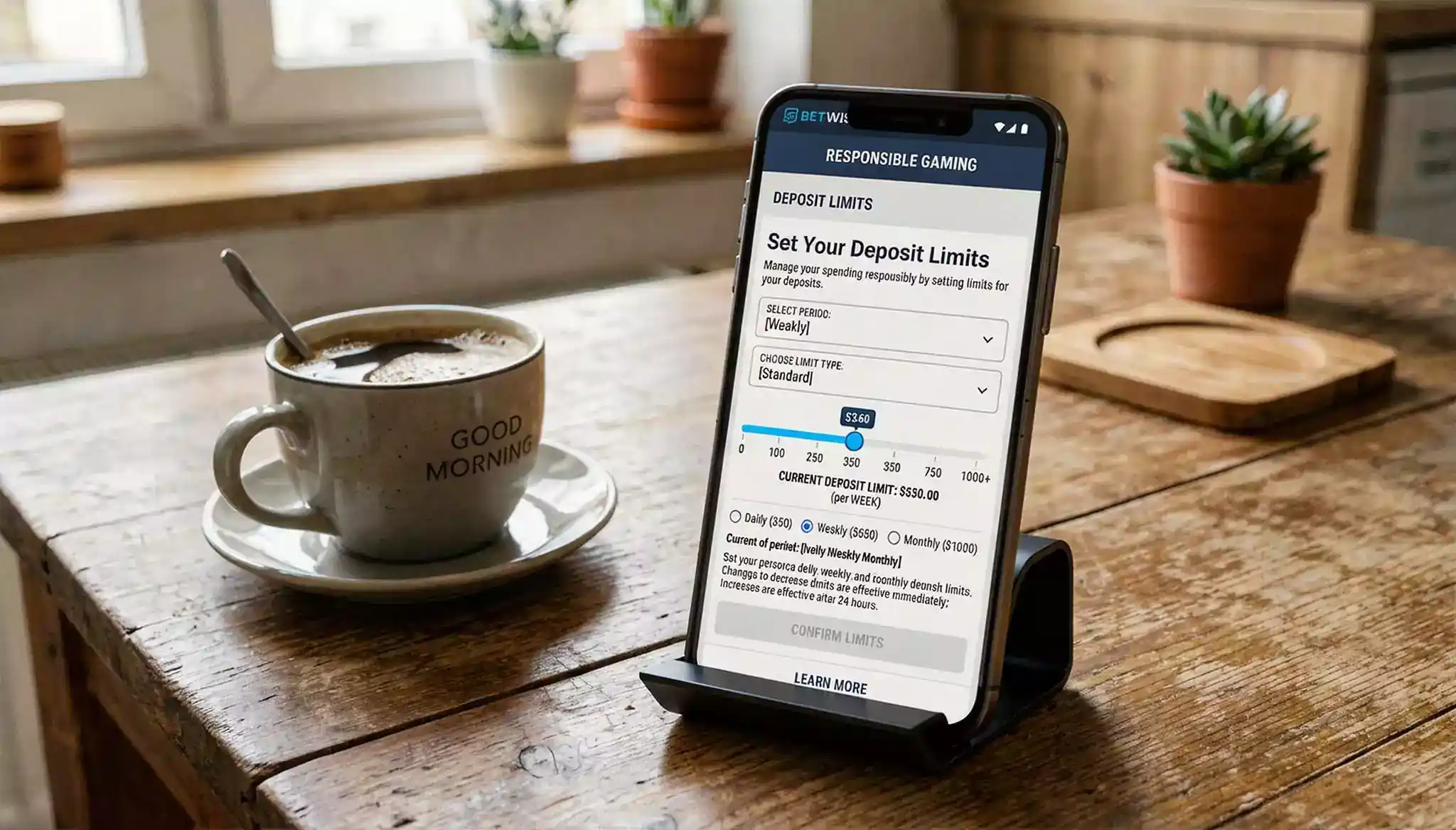
I set my first deposit limit in 2016, not because I had a gambling problem but because I’d noticed a pattern: on bad Saturdays, I’d deposit a second or third time to chase the afternoon’s losses. The limit didn’t change my enjoyment of racing one bit, but it stopped the late-afternoon deposits that I always regretted by Monday morning. That’s the thing about deposit limits and responsible gambling tools – they’re not just for people in crisis. They’re for anyone who wants a guardrail between a considered decision and a reactive one.
Deposit Limits – How They Work and How to Set Them
Every UKGC-licensed bookmaker is required to offer deposit limits, and the setup is straightforward. During registration or at any point afterwards, you can set a maximum amount you’re willing to deposit over a chosen period: daily, weekly, or monthly. Once you hit the limit, the operator blocks further deposits until the period resets.
The mechanics are deliberately asymmetric. Lowering a deposit limit takes effect immediately – you can reduce your daily limit from GBP50 to GBP20 right now, and the lower limit applies from this moment. Raising a limit triggers a cooling-off period, usually 24 hours for a daily limit increase and seven days for weekly or monthly increases. This delay prevents impulsive decisions to lift your limits in the heat of a losing run.
Some operators offer tiered limits that let you set separate caps for different products – one limit for horse racing, another for casino, another for sports. This granularity is useful if your spending patterns differ across products. A punter who bets GBP100 a month on racing but occasionally plays GBP20 on casino might want those budgets ring-fenced independently.
The practical value of deposit limits is in their automaticity. You set them once, and they work without any further willpower required. On a day when emotions are running high – a near-miss on a big accumulator, a controversial stewards’ enquiry, a horse beaten by a nose – the limit does the thinking you’d rather not do yourself.
GAMSTOP and Self-Exclusion – The Nuclear Option
GAMSTOP is the UK’s national self-exclusion scheme. When you register with GAMSTOP, you’re excluded from all UKGC-licensed online gambling operators for a minimum period of six months, with options for one year or five years. It’s comprehensive, irreversible within the chosen period, and applies across every licensed website and app in the UK.
The scheme exists because problem gambling – affecting roughly 0.4% of the adult population, approximately 300,000 people – sometimes requires a complete break rather than moderated access. Among horse racing bettors specifically, the rate is higher at 2.8% by PGSI/DSM-IV measures, though this remains below the gambling industry average. GAMSTOP provides that clean break without requiring the individual to contact each operator separately.
Individual operator self-exclusion is less absolute. You can self-exclude from a single bookmaker, typically for periods of six months to five years. The operator is then required to close your account, return your balance, and refuse to open a new account during the exclusion period. But this doesn’t prevent you from betting elsewhere – it’s a targeted measure, not a blanket one.
The distinction matters. If you’re looking to take a break from one operator because of a dispute or a change in your circumstances, individual self-exclusion is appropriate. If you’re concerned about your relationship with gambling as a whole, GAMSTOP is the only mechanism that provides genuine separation from all licensed operators simultaneously.
Cooling-Off Periods, Time-Outs, and Reality Checks
Between deposit limits and full self-exclusion sits a range of lighter-touch tools that most operators now offer. Time-outs – temporary breaks of 24 hours, 48 hours, seven days, or 30 days – lock your account for the chosen period without the formality or permanence of self-exclusion. They’re useful after a bad day, during a stressful week, or simply when you want to step back and reassess.
Reality checks are periodic notifications that remind you how long you’ve been logged in and how much you’ve deposited or wagered during the session. The frequency is adjustable – every 30 minutes, every hour, or at a custom interval. When a notification pops up telling you that you’ve been active for two hours and deposited GBP80, the information alone can be enough to prompt a conscious decision about whether to continue.
Session limits cap the amount of time you can spend logged into a gambling site in a single session. Loss limits cap the amount you can lose over a set period. Wager limits cap the total amount you can stake. Not all operators offer all of these tools, but the regulatory direction is toward mandatory implementation across the board.
The value of these tools is cumulative. A deposit limit prevents overspending. A reality check provides awareness. A time-out provides a circuit breaker. Used together, they create a framework that lets you engage with horse racing betting on your own terms, with boundaries you’ve chosen in advance rather than negotiating with yourself in real time.
UKGC Requirements Bookmakers Must Follow
The Gambling Commission mandates a baseline set of responsible gambling features for every licensed operator. These include: deposit limits available during registration and at any point afterwards, self-exclusion options, time-out facilities, access to gambling support information, and the ability to view transaction history and net spending. Operators that fail to provide these tools risk enforcement action, including fines and licence conditions.
Beyond the tools themselves, operators are required to monitor customer activity for signs of harm. This includes tracking patterns such as increasing deposit frequency, extended session times, chasing losses through escalating stakes, and attempts to reverse withdrawals. When concerning patterns are identified, the operator is required to interact with the customer – which can range from a pop-up message to a direct contact from the safer gambling team.
The standard of implementation varies. Some operators invest heavily in their safer gambling teams and use sophisticated algorithms to detect early warning signs. Others meet the minimum requirements without going further. As a punter, the quality of an operator’s responsible gambling infrastructure is worth considering when you choose where to bet – not because you expect to need it, but because the operator’s attitude toward player welfare reflects its broader approach to the customer relationship.
Can I reverse a GAMSTOP self-exclusion early?
No. A GAMSTOP self-exclusion cannot be reversed before the chosen minimum period has elapsed. If you selected six months, you must wait the full six months before you can request removal. After the period expires, you must actively contact GAMSTOP to be removed from the scheme – it does not lift automatically. This deliberate friction is designed to prevent impulsive decisions to resume gambling.
Are deposit limits shared across all bookmakers?
No. Deposit limits are set individually with each operator and are not shared between them. A GBP100 weekly limit at one bookmaker does not prevent you from depositing GBP100 at another. GAMSTOP self-exclusion is the only cross-operator mechanism that restricts your activity across all licensed sites simultaneously.
Written by the editors at Horse Racing Game Betting.