Horse Racing Betting Turnover Decline – Why the UK Market Lost GBP3 Billion Since 2022
 Available in US
In early 2022, I attended a racing industry conference where the mood was cautiously optimistic. Betting turnover on horse racing had held up through the pandemic better than expected, racecourse attendance was recovering, and the sport’s financial model seemed resilient. Three years later, the conversation at the same conference had turned to damage limitation. Online betting turnover on horse racing had dropped by GBP3 billion in real terms – a decline so steep that it’s reshaping prize money, fixture programmes, and the long-term economic viability of the sport.
The Numbers – GBP3 Billion in Real Terms
The raw figures are stark. Online betting turnover on horse racing stood at GBP10.01 billion in 2021-22. By 2022-23, it had fallen to GBP9.12 billion. The decline has accelerated since, with Gambling Commission data showing continued contraction through 2024 and into 2025. Adjusted for inflation, the cumulative loss exceeds GBP3 billion – a figure that represents millions of bets no longer being placed, accounts no longer being funded, and revenue no longer flowing into the sport.
Richard Wayman, the BHA’s Director of Racing, acknowledged the scale of the problem in the Q1 2025 Racing Report. Total betting turnover fell 9% compared to Q1 2024, a significant year-on-year drop that he described as “concerning.” He noted that while the racing product itself needed development to maintain its appeal as a betting medium, the decline was driven by “a much wider range of factors” than product quality alone.
The 9% headline figure masks variation within the market. The decline is concentrated in regular, midweek racing rather than big festival meetings. The everyday fixture programme – the Monday-to-Friday cards at smaller courses that form the backbone of the betting calendar – has seen the steepest turnover drops. The implications of that pattern are significant for the sport’s structure.
Core Fixtures Hit Harder Than Premier Meetings
The BHA’s own data reveals a telling split. Average betting turnover per race on Core Fixtures – the everyday meetings that constitute the majority of the racing calendar – fell 14.4% year-on-year in Q1 2025. On Premier Fixtures – the big Saturday meetings, festival days, and high-profile events – turnover remained broadly stable.
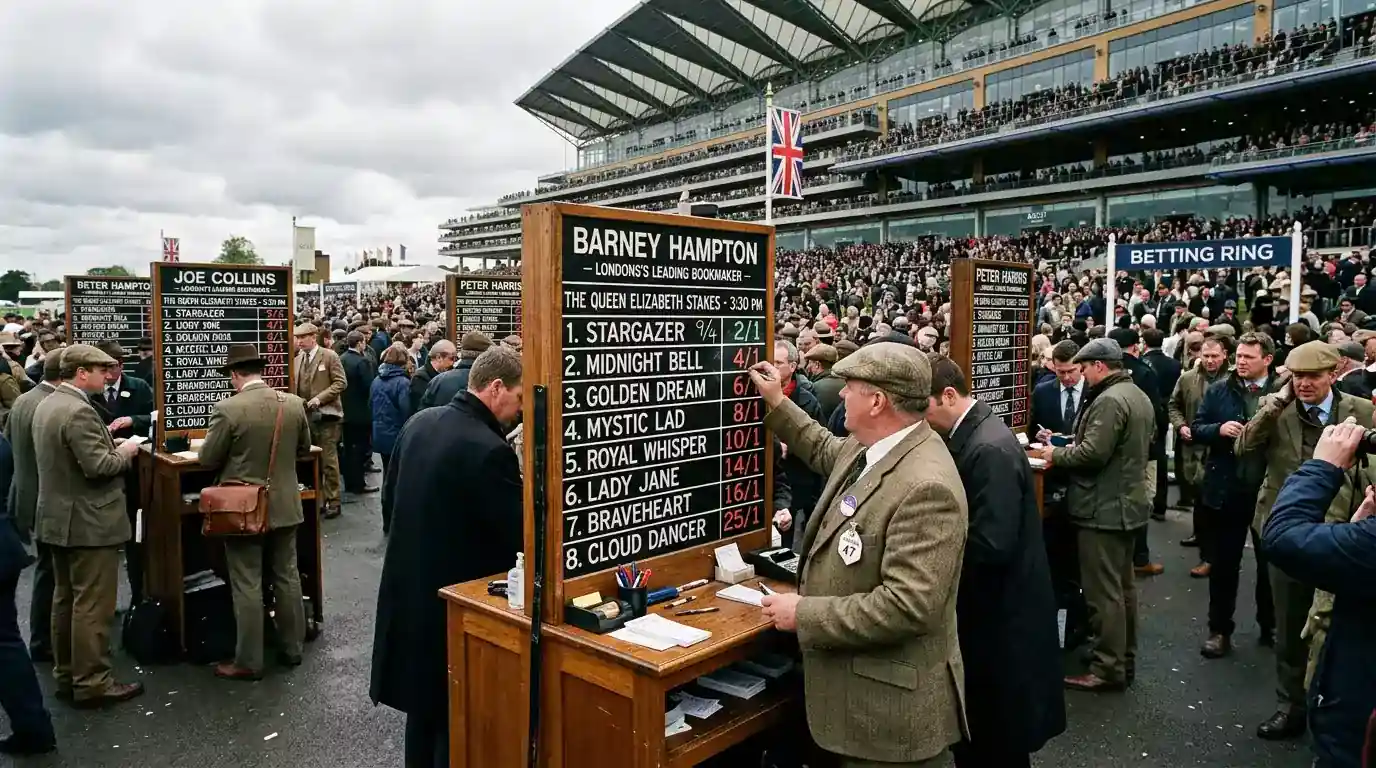
This divergence points to a structural shift in how punters engage with horse racing. The casual, habitual bettor who might have had a few bets on a Wednesday afternoon at Wolverhampton is stepping back. The engaged, event-driven bettor who turns up for Cheltenham, Royal Ascot, and the Grand National is still active. The sport is losing its everyday audience while retaining its occasional one.
For the fixture programme, this is a problem. Core Fixtures exist partly because of the betting revenue they generate – media rights payments from bookmakers fund racecourse fixture income, and those payments are calculated based on the volume of betting a fixture attracts. If midweek turnover keeps falling, the financial case for running those fixtures weakens, and the sport faces a choice between maintaining a schedule that’s no longer economically supported or cutting fixtures to match the revenue available.
The cumulative decline tells the same story from a wider angle. From Q1 to Q3 of 2025, combined betting turnover fell 4.2% against 2024 and 12.8% against 2023. The trend is consistently downward, and the rate of decline, while slowing, has not reversed.
What Is Driving the Decline
No single factor explains the turnover decline, but three forces dominate. The first and most cited is affordability checks. Since the threshold dropped to GBP150 in February 2025, a significant cohort of regular punters has either reduced their activity, closed accounts, or migrated to operators outside the regulated market. Simon French, Director of Orange County Services, captured the concern at an industry summit: “Affordability is the biggest issue, but my biggest concern is not that it’s driving people away – it’s how do you get them back?” The question of whether lost customers can be recovered once the regulatory environment stabilises is one nobody has answered yet.
The second force is competition from other gambling products. Online casino – slots, live dealer games, virtual sports – now generates GBP5.0 billion in GGY compared to GBP2.6 billion for remote betting. The bookmakers that once built their businesses around horse racing are investing marketing budgets, development resources, and promotional offers into casino products that deliver higher margins. Horse racing’s share of the gambling pie is shrinking not because fewer people are gambling but because they’re gambling on different products.
The third force is generational shift. Younger adults are less likely to engage with horse racing than older demographics. The sport’s traditional pathway – introduced through family, first trip to the racecourse, learning the form – has weakened as leisure habits have diversified. Horse racing betting participation peaks in the over-45 age group, and the sport has struggled to attract the 18-35 demographic that drives growth in other betting verticals.
Impact on Prize Money, Media Rights, and the Fixture Programme
The financial pipeline that sustains British racing runs from betting turnover to bookmaker profit to Levy income and media rights payments to racecourses and prize money. Every link in that chain is under pressure.
Media rights are the largest single income stream for most UK racecourses. David Hunter, speaking as a racecourse representative, put it plainly: “The simple fact is that media rights are by a country mile our biggest income stream. We would want to keep investing in prize-money for trainers, owners and jockeys, but that will be difficult if there is less money coming in from media rights.” The concern is not theoretical – it’s a direct consequence of falling turnover translating into lower media rights valuations at the next negotiation round.
Prize money increased to GBP194.7 million in 2025, a 3.5% rise supported by record Levy yields. But that growth was funded by wider bookmaker margins on declining turnover – a combination that may not be sustainable. If margins normalise or turnover falls further, prize money will come under pressure. The BHA has projected that the number of races run in 2027 could decline by 6-7% compared to 2024, a reduction that would directly cut betting opportunities and potentially trigger a further turnover decline in a negative feedback loop.
The horse population tells its own story. The number of horses in training fell to 21,728 in 2025, a 2.3% decline from 2024. Fewer horses means smaller fields, less competitive races, and weaker betting markets. Owners deciding that the economics of racehorse ownership no longer stack up – because prize money doesn’t cover training fees, because the fixture programme is contracting, because the sport’s audience is shrinking – is the slowest-moving but most fundamental threat to the sport’s future.
Is horse racing the only sport seeing a decline in betting turnover?
Horse racing’s decline is among the steepest in UK betting. Football betting turnover has been more resilient, and online casino products have grown significantly. The decline is specific to horse racing rather than the gambling market as a whole. Total GGY across the remote gambling sector reached GBP7.8 billion in 2024-25, with horse racing’s share shrinking while casino and other betting products grew.
How does betting turnover affect prize money?
Betting turnover drives prize money through two main channels. The Horserace Betting Levy – a 10% charge on bookmaker profits from British racing – directly funds prize money, and lower turnover eventually means lower levy income. Media rights payments from bookmakers to racecourses are also linked to the volume of betting a fixture generates. When turnover falls, both income streams come under pressure, which constrains the prize money available for distribution.
Will fewer races mean fewer betting opportunities?
Yes. If the fixture programme contracts – the BHA has projected a 6-7% reduction in race numbers by 2027 – there will be fewer individual races to bet on. This is most likely to affect midweek and evening fixtures at smaller courses, which generate the lowest betting turnover. The major meetings and Saturday fixtures are expected to be protected, but the overall volume of daily betting opportunities would decrease.
Prepared by the Horse Racing Game Betting editorial staff.