Starting Price in Horse Racing – How SP Is Set and When to Take It
 Available in US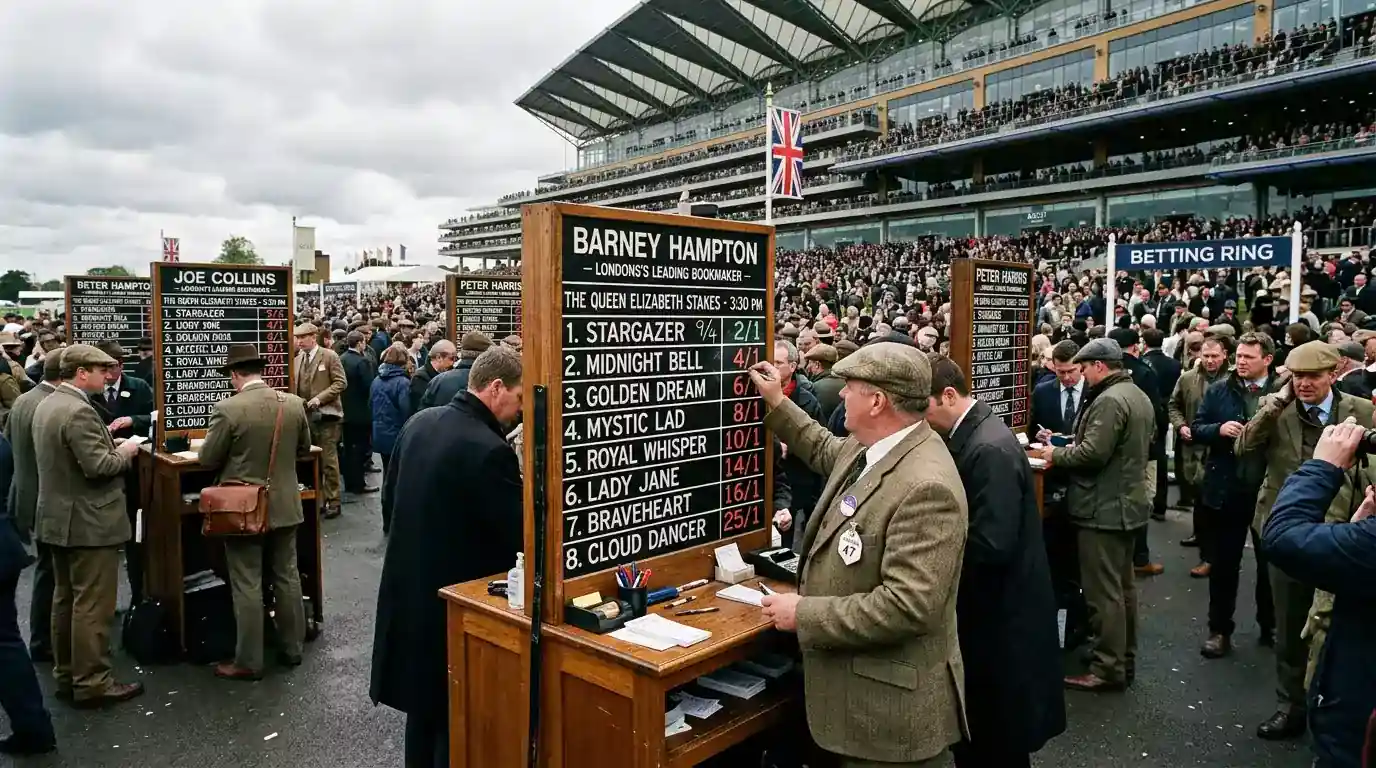
Years ago, I watched a punter at Kempton argue with a bookmaker’s assistant about his payout. He’d taken SP on a winner, expecting the 5/1 he’d seen on the screens an hour before the race. The returned SP was 7/2. He couldn’t understand how the price had shortened, who had decided it, or why he had no say in the matter. That conversation – which lasted a good fifteen minutes – taught me more about how little most bettors understand Starting Price than any textbook ever could.
SP is the default settlement price for millions of horse racing bets in the UK, yet the mechanism behind it remains opaque to the majority of punters who rely on it. Understanding who sets it, how, and when it works for or against you is one of those quiet edges that separates informed bettors from everyone else.
Who Sets the SP and How the On-Course Market Works
The Starting Price isn’t decided by a computer algorithm or a committee in an office. It’s determined by SP reporters – independent officials employed by the Starting Price Regulatory Commission – who physically attend racecourses and observe the on-course betting ring in the moments before each race. Their job is to record the odds being offered by on-course bookmakers at the moment the race starts and calculate a representative price for each horse.
The process works like this: in the minutes before the off, on-course bookmakers adjust their prices based on the money they’re taking. If a horse is attracting heavy support, its price shortens. If nobody wants it, the price drifts. The SP reporter records the best prices available across the ring at the precise moment the stalls open or the tape goes up. The industry SP is then derived from these prices as the most representative available odds.
Only about 5% of UK horse racing betting turnover flows through the pari-mutuel system – the Tote pool. The vast majority goes through fixed-odds bookmakers, and SP sits at the heart of that fixed-odds ecosystem. It’s the benchmark price, the default settlement, and the reference point against which Best Odds Guaranteed offers are measured.
What makes SP reliable is its independence. SP reporters don’t work for any bookmaker, and the on-course market they observe is a physical, visible marketplace where real money changes hands. The prices aren’t theoretical or model-driven – they reflect actual supply and demand from punters and layers standing in the ring.
Industry SP vs Bookmaker SP
Here’s a distinction that most punters miss entirely: the “official” industry SP and the SP your online bookmaker uses to settle your bet are not always the same number. Major online operators typically use the industry SP, but some apply their own proprietary SP which may differ slightly – almost always in the bookmaker’s favour.
The industry SP is calculated from the on-course market and published as the definitive starting price. It’s the price you’ll see recorded in the form book, on the Racing Post results page, and in historical databases. When racing professionals talk about SP, this is what they mean.
A bookmaker SP, where it differs, is usually generated from the operator’s own online market at the time of the off. Because online markets are significantly larger than the on-course ring – GBP766.7 million in remote horse racing GGY in 2024-25 alone dwarfs the on-course turnover – some operators argue their own SP is more representative of the actual market. In practice, the difference between industry SP and bookmaker SP is usually small – a tick or two – but across hundreds of bets a year, those ticks compound. Always check your bookmaker’s terms to know which SP version they use for settlement.
SP, BOG, and Early Prices – Which to Take and When
I lost money for years by defaulting to SP without thinking about it. The turning point came when I started tracking my results by settlement type – early price with BOG versus SP – and discovered I was leaving roughly 3% on the table annually by not taking early prices when they were available.
The logic is straightforward. Best Odds Guaranteed means if you take an early price and the SP is higher, you get paid at the SP instead. If the SP is lower, you keep your early price. It’s a one-way valve that only moves in your favour. Taking SP gives you no such protection – you get whatever the market determines at the off, and that’s it.
The scenario where SP beats an early price is simple: when the horse’s price drifts significantly between the time you would have bet and the off. But with BOG, that drift works in your favour anyway – you take the early price and get upgraded to the bigger SP if it moves out. The only time SP genuinely outperforms early prices is when BOG isn’t available, which is rare for UK racing at the major operators.
There are situations where taking SP deliberately makes sense. In races with very fluid, unpredictable markets – big handicaps where the money comes late and moves prices dramatically – SP can land at a significantly different number from any price available earlier in the day. If you don’t have a strong opinion on the direction of market movement, SP removes the timing decision entirely. I also default to SP when betting on-course through the Tote, where fixed odds aren’t relevant and the pool dividend is determined after the race.
When SP Actually Gives You an Edge
There’s one under-appreciated scenario where SP consistently delivers value: when a heavily backed horse gets beaten. In races where the market has been distorted by one horse attracting disproportionate support – shortening from 4/1 to 2/1, for instance – the prices of every other horse in the field are pushed out. If you’ve taken SP on one of those other runners, you benefit from the market inflation caused by the gamble on the short-priced rival.
I’ve seen this pattern play out regularly at the Cheltenham Festival, where Irish-trained runners attract tidal waves of support that compress their prices and inflate everything else in the field. If you fancy a British-trained contender at a price that reflects genuine value, SP can work in your favour precisely because the late money on the Irish horse has pushed your selection’s SP beyond what any early price offered.
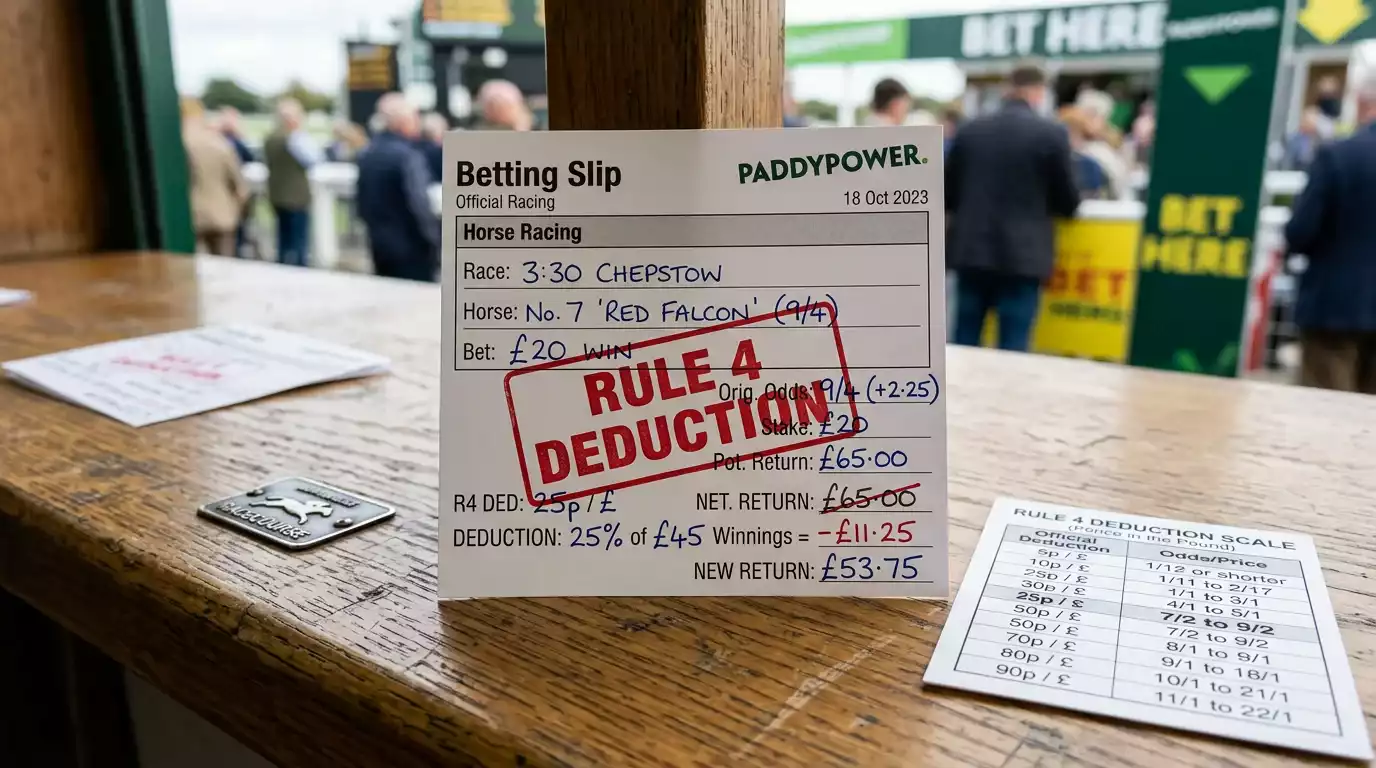
The reverse is also true, and it’s the trap. When a fancied horse is withdrawn close to the off, Rule 4 deductions apply and the SP of every remaining runner shortens to reflect the reduced field. Taking SP in a race where a late withdrawal is likely – perhaps a temperamental horse that’s been known to plant itself in the stalls – exposes you to a deflated price with a deduction on top. In those cases, an early price with BOG is unambiguously the smarter play.
Is SP always worse than the early price?
No. SP can be higher or lower than the early price depending on how the market moves. If a horse drifts in the market before the off, SP will be bigger than the early price. However, if your bookmaker offers Best Odds Guaranteed, taking the early price gives you the best of both worlds – you keep the early price if it is higher or get upgraded to SP if it is higher. Without BOG, SP is a gamble on market direction.
Do exchanges use Starting Price?
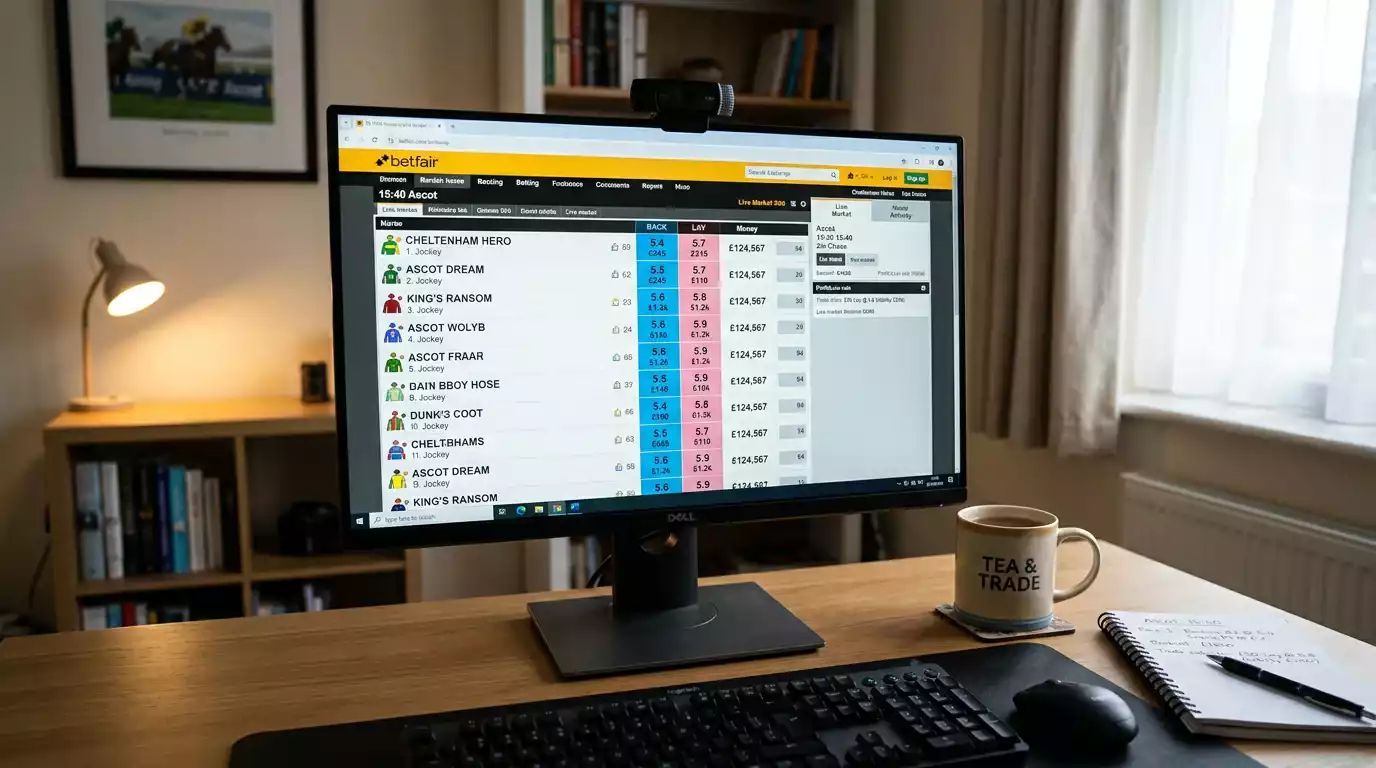
Betting exchanges like Betfair offer their own version of SP called BSP – Betfair Starting Price. It is calculated from the exchange market at the time of the off, not from the on-course ring like the traditional industry SP. BSP is often different from industry SP because the exchange market is a separate pool of liquidity. You can choose to take BSP on Betfair, or you can request a specific price and wait for it to be matched.
Written by the editors at Horse Racing Game Betting.