The Black Market in UK Horse Racing Betting – How It Grew 522% and Why It Matters
 Available in US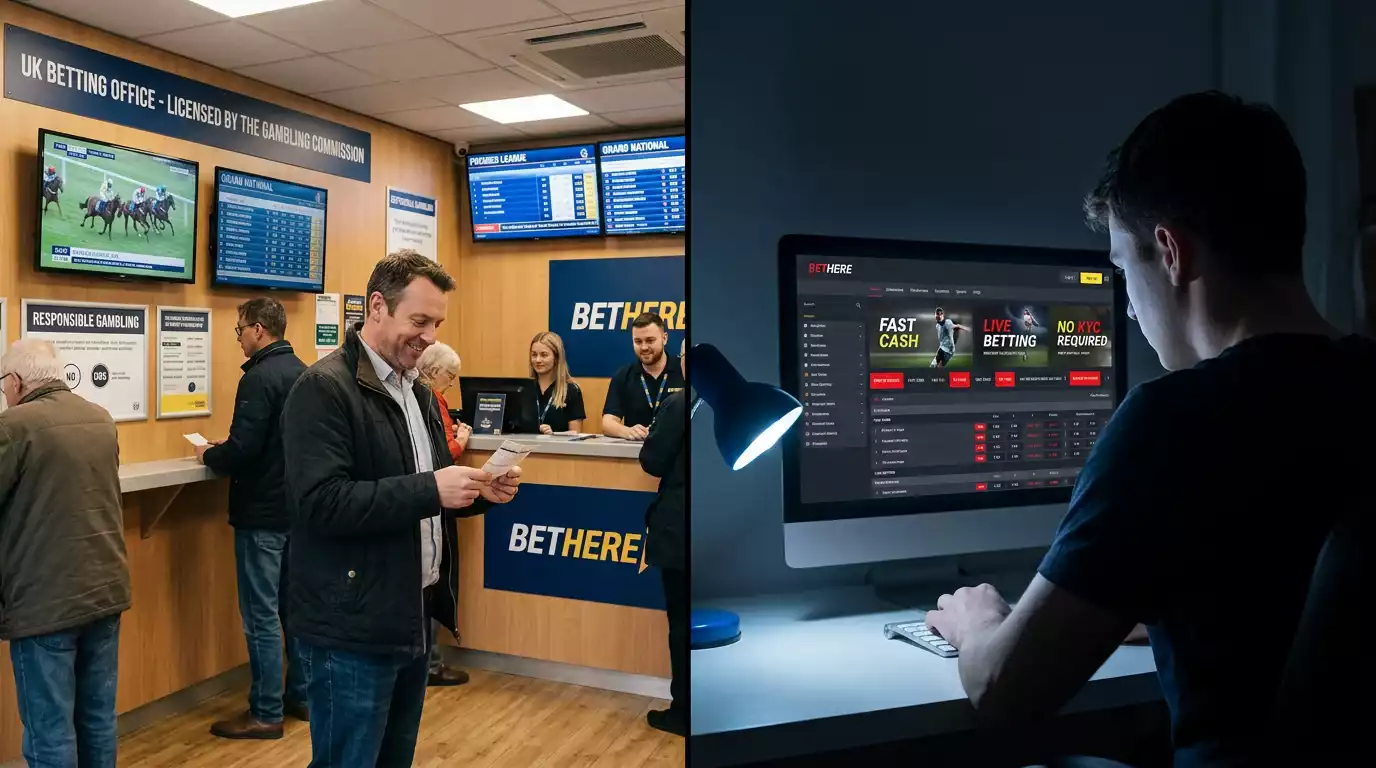
I had a conversation at a racing industry event last year that stopped me cold. A well-known owner – someone who runs horses at the highest level – told me he’d started using an unlicensed offshore site for his bigger bets because his regular bookmaker kept freezing his account over affordability checks. He knew it was risky. He did it anyway. That conversation crystallised something I’d been watching in the data for three years: the black market in UK horse racing betting isn’t a marginal curiosity anymore. It’s a structural problem that’s growing faster than anyone in the regulated industry wants to admit.
522% Traffic Growth – The Numbers Behind the Shift
Between August 2021 and September 2024, unique visitor traffic to 22 identified unlicensed betting sites focused on British horse racing grew by 522%. That number – from the International Federation of Horseracing Authorities, cited by the British Horseracing Authority – isn’t a rounding error or a seasonal blip. It’s an exponential acceleration in punters seeking alternatives to the licensed market.
The Betting and Gaming Council estimates that 1.5 million UK residents now spend up to GBP4.3 billion annually on unregulated gambling. Not all of that is horse racing, but racing’s share is disproportionately large because the sport attracts the type of punter most affected by regulatory changes – experienced bettors who stake at levels that trigger the new affordability thresholds.
Grainne Hurst, CEO of the Betting and Gaming Council, has been blunt about the operators behind this growth. She described them as entities that “don’t pay tax, don’t care about safer gambling, and do not contribute a penny to the levy.” The characterisation is accurate: unlicensed operators exist entirely outside the UK regulatory framework. They hold no UKGC licence, they’re not subject to affordability checks, they don’t contribute to the Horserace Betting Levy, and they offer none of the consumer protections that licensed operators are required to provide.
The 522% figure represents only the sites that researchers were able to identify and track. The actual scale of unlicensed activity is almost certainly larger, because new sites appear regularly, many operate through social media channels or messaging apps that are harder to monitor, and some use cryptocurrency payments that leave no conventional financial trail.
Why Punters Move to Unlicensed Sites
The motivation isn’t complicated, and it isn’t criminal intent. The Racing Post’s Big Punting Survey in 2025 asked respondents directly: roughly 25% said they would consider using an unlicensed operator in response to affordability checks, with 11.8% saying they would “definitely” make the switch. The trigger is overwhelmingly the experience of having a regulated account restricted or closed after refusing to provide personal financial documents.
From the punter’s perspective, the appeal of unlicensed sites is straightforward. No affordability checks. No stake limits imposed unilaterally. No account closures for winning too much. No requests for bank statements or payslips. The experience feels closer to what UK betting was like a decade ago – before the regulatory environment tightened – and for punters who managed their own gambling responsibly before checks existed, the return to that experience is seductive.
After the October 2024 budget raised gambling duties, Hurst described the black market as having “hit the jackpot” – a phrase that captures the industry’s view that every regulatory tightening or tax increase makes the unlicensed alternative more attractive. A former Chief Strategy Officer at a major operator, speaking at an industry summit, went further: “If we were to think of a scenario where we could make the black market more attractive, I’d struggle to come up with much more that we could do.” The frustration is palpable across the regulated sector.
No Tax, No Levy, No Safety Net – The Real Cost
The financial damage to UK racing from the black market operates through two channels. The direct channel: every pound wagered with an unlicensed operator is a pound that doesn’t generate Levy income for racing. The Levy – a 10% charge on bookmaker profits from British racing – funds prize money, racecourse improvements, and the sport’s infrastructure. In 2024-25, the Levy yielded a record GBP109 million, but that figure would be substantially higher if the revenue currently flowing to unlicensed operators was captured by the regulated market.
The indirect channel is taxation. Licensed operators pay a 21% point-of-consumption tax on their gross gambling yield. Unlicensed operators pay nothing. The Treasury loses revenue, which reduces the government’s financial incentive to support racing as an economic contributor – a sport that generates GBP4.1 billion in annual economic impact and supports 85,000 jobs.
For the individual punter, the risks are immediate and concrete. Unlicensed operators have no obligation to pay out winning bets. There’s no dispute resolution mechanism, no Financial Ombudsman, no UKGC enforcement action if you’re cheated. Customer funds aren’t ring-fenced – if the operator disappears, your balance goes with it. And there are no responsible gambling tools: no deposit limits, no self-exclusion, no reality checks. The punter who moved to avoid affordability checks has traded a bureaucratic inconvenience for a total absence of protection.
Consumer Risks of Betting Outside UKGC Regulation
Beyond the financial risks, there are legal grey areas that most punters don’t consider. Under current UK law, it is not a criminal offence for an individual to place a bet with an unlicensed operator – the offence lies with the operator for providing gambling services without a licence. But that legal position could change, and punters who have provided personal data to unlicensed sites have no control over how that data is used, stored, or shared.
Identity theft is a genuine concern. Unlicensed operators collecting passport scans, bank details, and proof-of-address documents operate outside any data protection framework enforceable by UK authorities. The irony is striking: punters who refused to share financial documents with licensed, regulated bookmakers end up providing the same – or more – information to operators with no legal obligation to protect it.
The safest position for any UK punter is straightforward: bet only with operators holding a valid UKGC licence. You can verify any operator’s licence status on the Gambling Commission’s public register – it takes thirty seconds. The affordability checks may be frustrating, but the alternative exposes you to risks that no odds advantage can compensate for. The growth of the black market is a policy problem that needs a policy solution; individual punters making themselves vulnerable to unregulated operators won’t force that solution and may get hurt in the process.
Is it illegal to bet on an unlicensed site from the UK?
Under current UK law, the criminal offence lies with the operator providing gambling services without a UKGC licence, not with the individual placing the bet. However, you have no consumer protection, no guaranteed payouts, and no recourse if something goes wrong. The legal position for individuals could also change in future legislation.
Do unlicensed bookmakers pay the horserace betting levy?
No. The Horserace Betting Levy applies only to licensed UK operators. Unlicensed and offshore bookmakers contribute nothing to the levy, which means the money wagered with them generates zero funding for prize money, racecourse infrastructure, or any other aspect of British racing’s financial ecosystem.
How can I check if a betting site is UKGC-licensed?
Visit the UK Gambling Commission’s public register on their official website and search for the operator by name. Every licensed operator has a licence number displayed on the register, and most display their licence number in the footer of their website. If an operator does not appear on the register, it is not licensed to offer gambling services to UK customers.
Published by the Horse Racing Game Betting team.