Each Way Betting in Horse Racing – Place Terms, Payouts, and When It Pays
 Available in US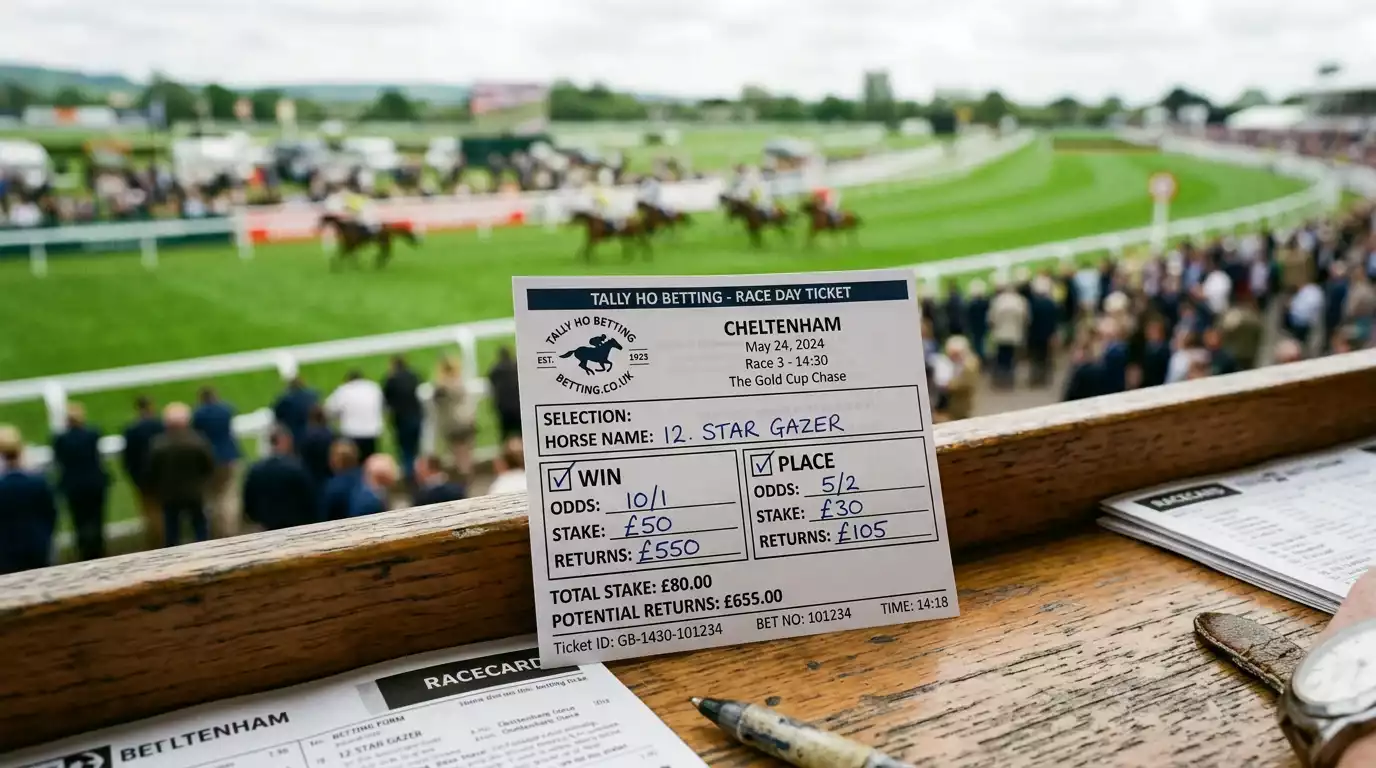
I placed my first each way bet at Newbury in 2014 on a 14/1 shot in a handicap hurdle. The horse ran a blinder, hit the front two out, then got collared on the line and finished third. I was gutted for about four seconds – until I remembered the place part of my bet was still paying out. That moment converted me from a win-only punter into someone who treats each way betting as a genuine strategic tool rather than a consolation prize.
Each way is the most popular bet type in UK horse racing, and yet a surprising number of regular punters don’t fully understand how the place terms work, how the fractions are applied, or when it actually makes mathematical sense to split your stake into two. Favourites win roughly 33% of all races, which means two-thirds of the time your win bet is dead money. Each way doesn’t solve that problem entirely, but it reshapes the risk in ways that matter if you know when to deploy it.
Two Bets in One – The Mechanics of Each Way
The first time someone told me an each way bet is “two bets in one,” I nodded along and pretended I understood. It took a second conversation – and losing a bet I thought I’d won – to grasp what that actually means for my wallet. When you place a GBP10 each way bet, you’re spending GBP20 total: GBP10 on your horse to win, and GBP10 on your horse to place. These are two completely separate bets that happen to travel together.
The win part is straightforward – if your horse crosses the line first, you collect at the full advertised odds. The place part pays a fraction of those odds if your horse finishes in one of the designated place positions. That fraction depends on the type of race and the number of runners, and this is where most punters trip up.
For non-handicap races with eight or more runners, the standard place terms are 1/4 of the win odds for the first three places. In handicap races with 16 or more runners, those terms typically extend to 1/4 odds for four places. For fields of five to seven runners, you’ll usually get 1/4 odds for two places. And in races with four or fewer runners, most bookmakers won’t offer each way at all – it’s win only.
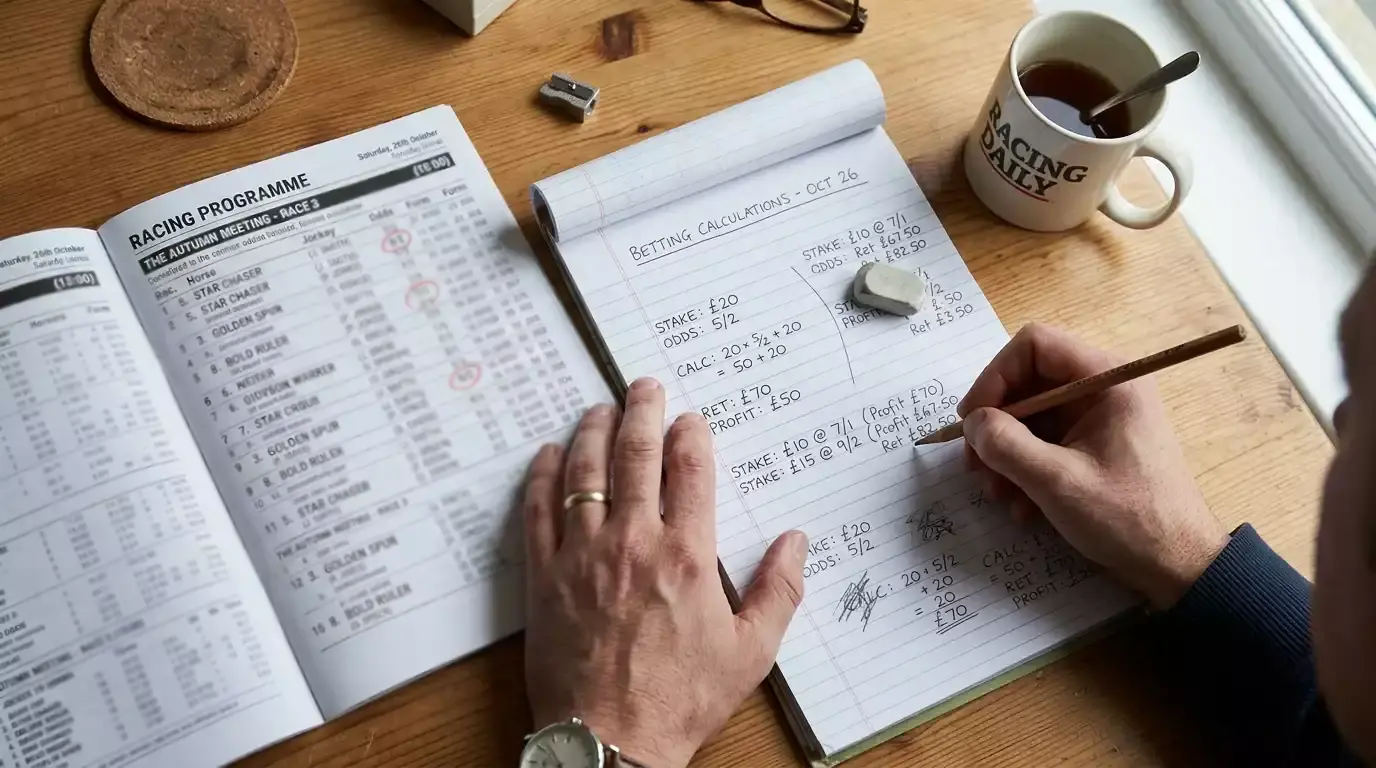
Here’s where the maths gets interesting. Say you back a horse at 10/1 each way for GBP5. Your total outlay is GBP10. If the horse wins, your win bet returns GBP55 (GBP50 profit plus GBP5 stake) and your place bet returns GBP17.50 (10/1 divided by 4 = 5/2, so GBP12.50 profit plus GBP5 stake). Total return: GBP72.50 from a GBP10 outlay. If the horse finishes second or third in an eight-runner field, the win bet is lost but the place bet still returns GBP17.50 – a GBP7.50 profit on your GBP10 total stake.
The critical point that catches newcomers out: each way doubles your stake. Always. A GBP5 each way bet costs GBP10. I’ve watched friends at the racecourse discover this the hard way when their account balance dropped twice as fast as expected.
Calculating Your Each Way Returns
Last spring I backed a horse at Cheltenham at 8/1 in a 20-runner handicap hurdle, GBP10 each way. The horse finished fourth. Without working through the calculation beforehand, I wouldn’t have known whether to celebrate or commiserate – so let me walk through exactly how the numbers fall.
With 20 runners in a handicap, place terms were 1/4 odds for the first four places. The place odds: 8/1 divided by 4 = 2/1. My place bet of GBP10 at 2/1 returned GBP30 (GBP20 profit plus GBP10 stake). The win bet of GBP10 was lost. Total outlay: GBP20. Total return: GBP30. Net profit: GBP10. A fourth-place finish still delivered a 50% return on my total stake.
Now contrast that with a shorter-priced horse. Take a 3/1 shot in the same 20-runner handicap. If it finishes fourth, the place odds are 3/1 divided by 4 = 3/4. A GBP10 place bet at 3/4 returns GBP17.50. Total outlay was GBP20. Net result: a GBP2.50 loss despite your horse placing. This is why each way betting at short prices in large fields can actually destroy value – the place fraction simply doesn’t compensate for the lost win stake.
The sweet spot sits with horses priced between 6/1 and 20/1 in fields of 12 or more runners. At those prices, the place component generates genuine standalone profit, not just partial loss recovery.
Extra Place Offers and Enhanced Each Way Terms
Around 2018, bookmakers started competing on extra place offers, and it quietly changed the each way landscape. Instead of paying three places in a standard race, operators began offering four, five, or even six places on selected events – particularly big Saturday handicaps and festival races.
These offers are not charity. Bookmakers use them to attract volume on high-profile meetings where they expect balanced books anyway. But for the punter, extra places shift the maths considerably. In a typical 16-runner handicap, moving from three paying places to four increases the probability of a place return from roughly 19% to 25%. That’s a meaningful edge on every bet, compounded across a season.
The catch is selectivity. Extra place offers are overwhelmingly concentrated on big meetings – Cheltenham, Aintree, Royal Ascot, the Ebor. For your Monday card at Plumpton, standard terms apply. I keep a mental note of which meetings trigger extra places and adjust my each way strategy accordingly. During festival weeks, I’m far more willing to back longer-priced runners each way, knowing the safety net extends further than usual.
Enhanced each way terms – where the place fraction is boosted from 1/4 to 1/3 or even 1/2 – are rarer but even more valuable. When a bookmaker offers 1/2 odds for places instead of 1/4, a 10/1 shot’s place component jumps from 5/2 to 5/1. That transforms a modest consolation into a genuinely profitable outcome on its own.
When Each Way Beats Win-Only
After twelve years of keeping records, I can tell you exactly when each way outperforms a straight win bet: it’s when the place probability significantly exceeds the implied probability of the place fraction. That sounds technical, but in practice it boils down to three scenarios.
First, large-field handicaps with horses priced 8/1 to 20/1. The probability of placing in a 16-runner race is materially higher than the place odds suggest, because handicap races compress the ability gap between runners. Second, competitive Grade 1 or Group 1 races where the market is spread across four or five genuine contenders – here, the place component on a 5/1 or 6/1 shot carries real standalone value. Third, any race where your analysis says a horse will finish in the first three but is unlikely to win – perhaps it lacks the tactical speed to get to the front but stays on strongly.
Where each way hurts is short-priced horses in small fields. Backing a 2/1 favourite each way in a six-runner race is almost always worse than putting the same total stake on it to win. The place fraction at 2/1 is just 1/2 (evens to half a point), and the probability of finishing in the first two is already priced into the win odds. You’re paying double the stake for a safety net that barely covers its own cost. Holding accounts with two or three bookmakers and comparing place terms regularly delivers 2-5% better returns over a season than sticking with a single operator – and that margin widens during festival periods when other bet types come into sharper focus alongside each way.
Does each way mean my stake is doubled?
Yes. An each way bet is two separate bets – one on the win and one on the place. A GBP5 each way bet costs GBP10 in total. The GBP5 win bet pays at full odds if your horse wins, while the GBP5 place bet pays a fraction of the odds if the horse finishes in the designated place positions.
What happens to my each way bet if my horse finishes second in a three-runner race?
In a race with four or fewer runners, most bookmakers do not offer each way terms at all – it is win only. If each way was available in a specific three-runner race, the place portion would typically require your horse to finish first or second at 1/4 odds, but this scenario is rare. Always check the terms before placing your bet.
Written by the editors at Horse Racing Game Betting.