Horse Racing In-Play Betting – How In-Running Markets Work and When to Use Them
 Available in US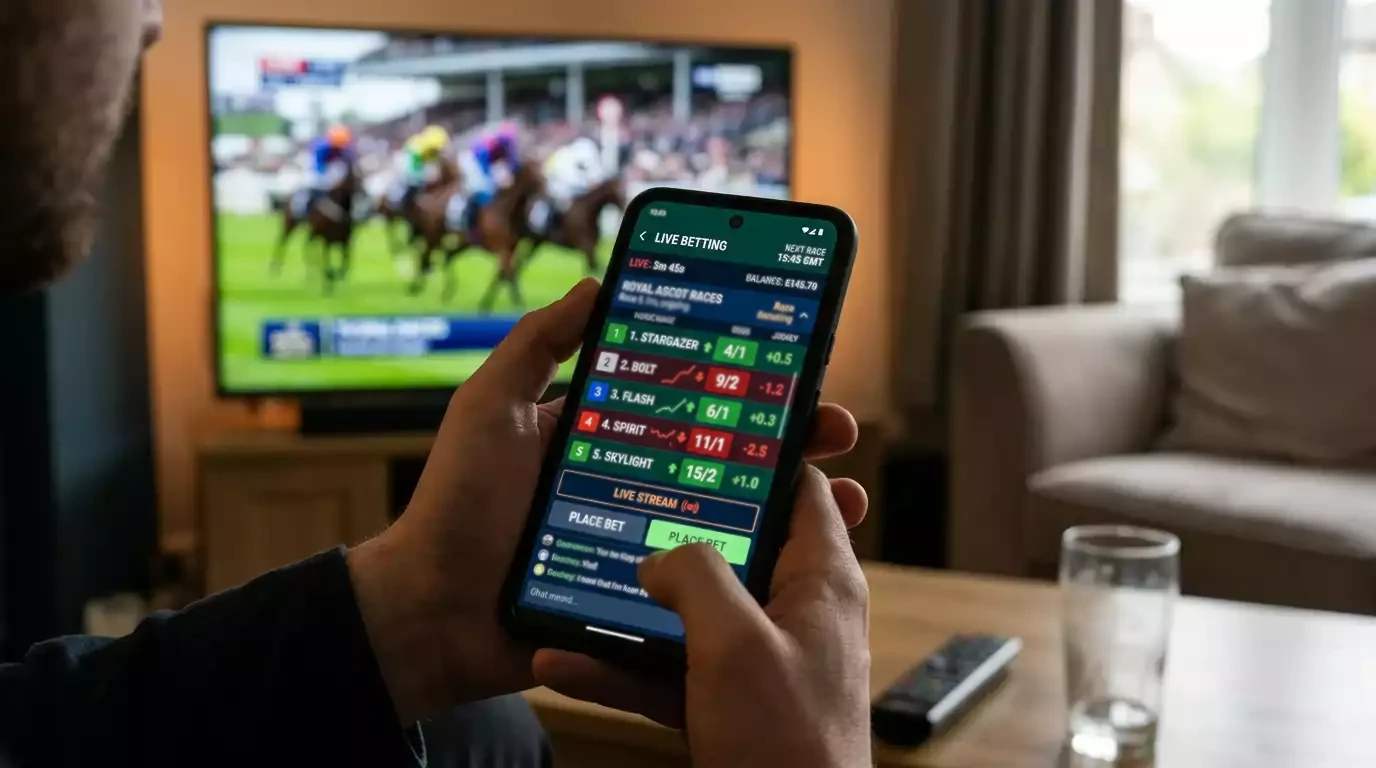
The first in-play bet I placed on a horse race was a panic lay. I’d backed a horse pre-race, watched it jump the first fence atrociously, and scrambled to lay it off on the exchange before the price reflected what I’d just seen. I was too late – the price had already moved by the time my lay was matched, and I ended up locking in a small loss whatever happened. That experience taught me the fundamental truth about in-play horse racing: the market moves faster than you think, and the gap between seeing something and acting on it is where profits are made or lost.
How In-Running Markets Open and Move
In-play horse racing markets on exchanges open the moment the race begins – when the stalls open for Flat races or the tape rises for jumps. From that point, prices update continuously based on the bets being matched in real time. Remote betting operators generated GBP2.6 billion in betting GGY in 2024-25, and a growing proportion of that figure comes from in-play activity across all sports, with horse racing’s in-running market among the most active.
The price movements during a race are driven by two inputs: what people watching can see, and what automated trading models project. As a horse takes a prominent position, its price shortens. As another drops to the rear, its price drifts. A fall eliminates a runner and causes instant price adjustments across the entire field. The in-play market is, in effect, a real-time probability engine – translating visual information into odds with a delay measured in milliseconds for professional traders and seconds for everyone else.
The speed and magnitude of these movements are unlike anything in pre-race betting. A horse priced at 4.0 (3/1) before the race might trade at 1.5 (1/2) turning into the home straight if it’s travelling strongly, or drift to 50.0 if it makes a bad mistake at a fence. The entire price range of a horse – from near certainty to near elimination – can play out within three or four minutes.
Exchange In-Play vs Bookmaker In-Play
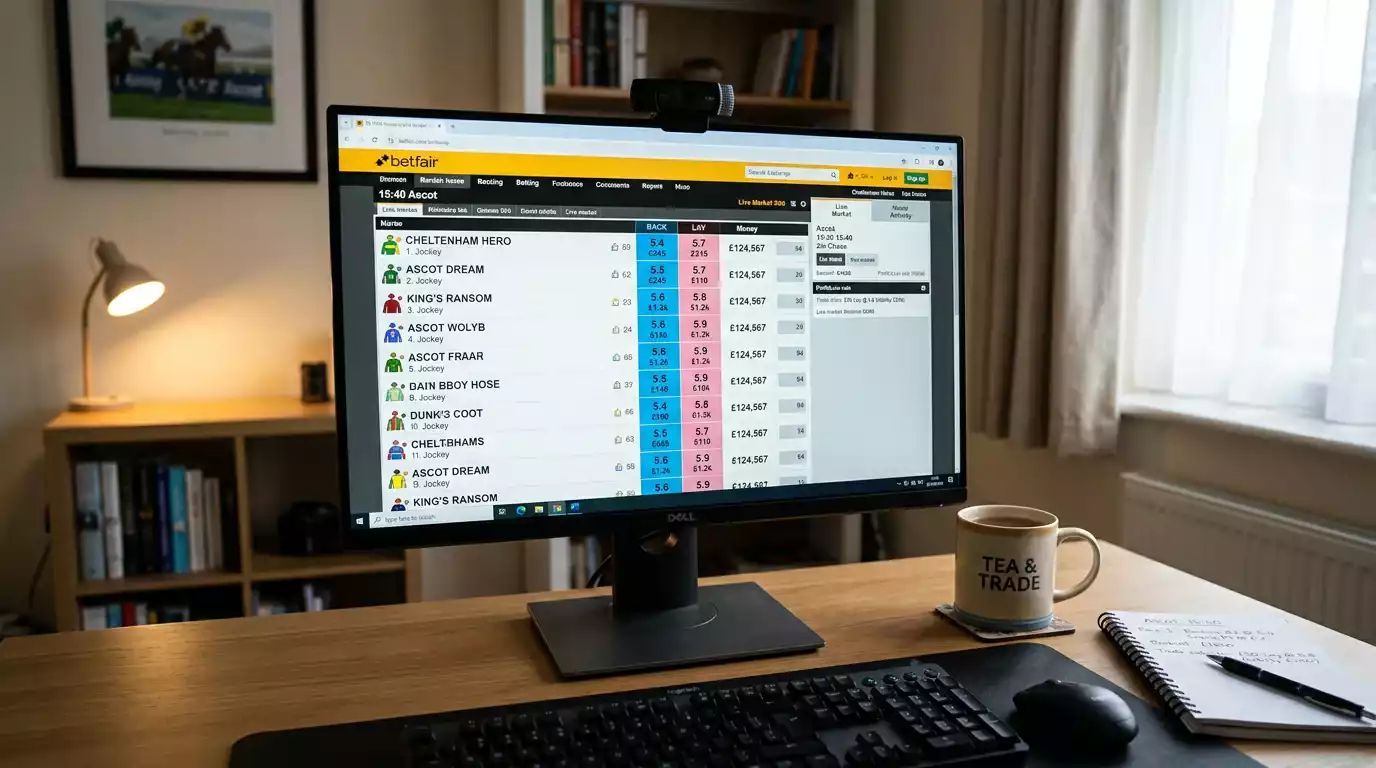
The exchange in-play market and the bookmaker in-play market are fundamentally different products. On an exchange, you’re betting against other punters. The price is determined by supply and demand in real time, and you can both back and lay. The liquidity on major race days is deep – six-figure sums matched in-running on the big Saturday and festival races. The remote horse racing betting market generating GBP766.7 million in GGY gives a sense of the scale of activity, though the exchange captures only a portion of that total.
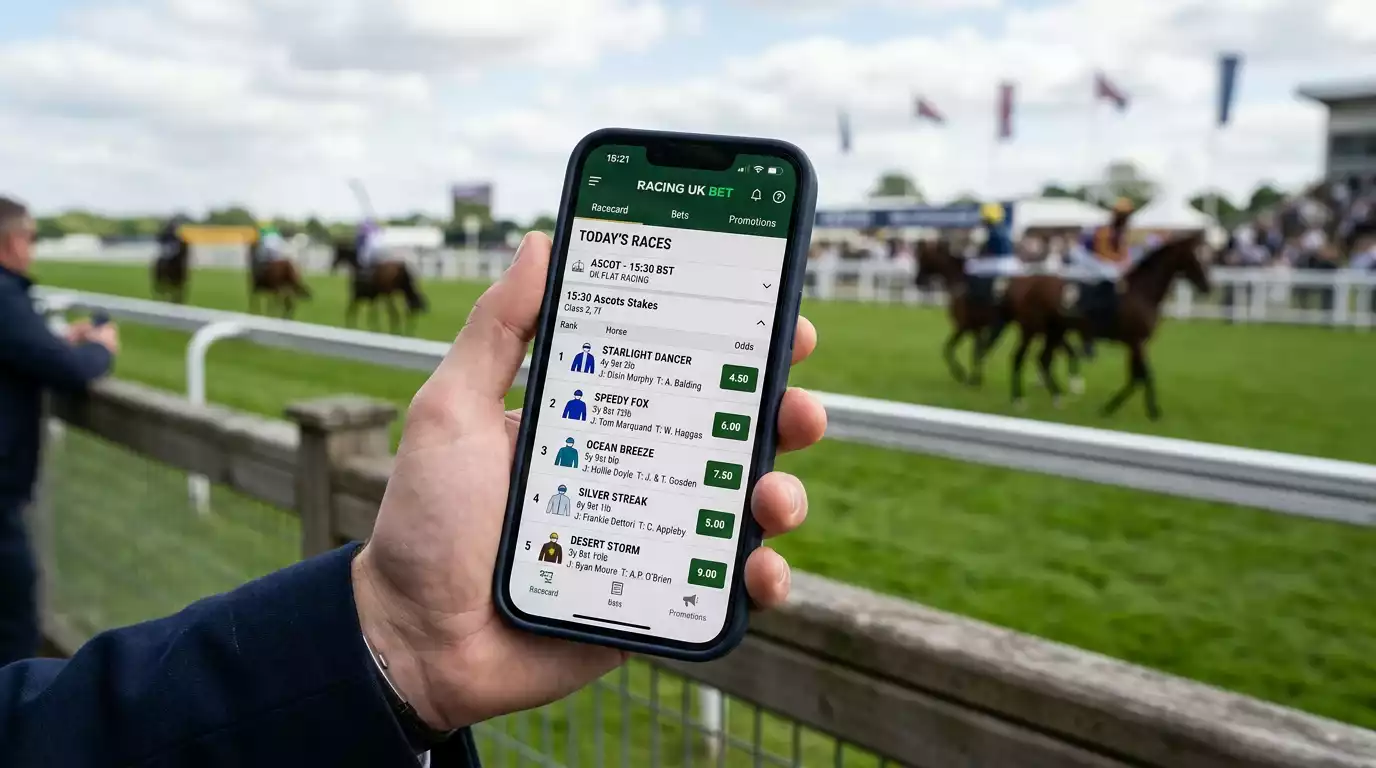
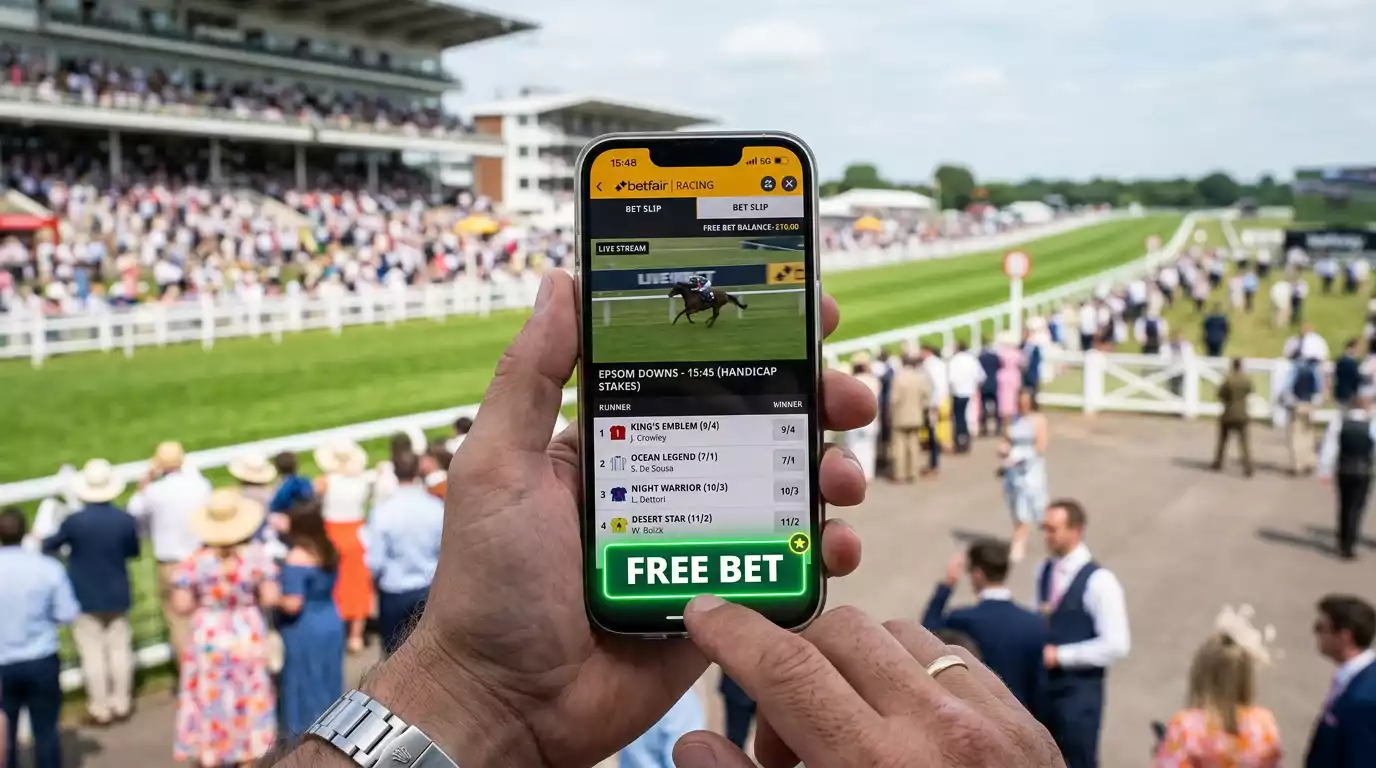
Bookmaker in-play is more limited. The operator sets the prices and adjusts them at intervals rather than continuously. Most bookmakers offer in-play on selected races only – typically televised races with sufficient interest to justify the operational cost of live market management. The odds available in-play from a bookmaker are almost always less competitive than the exchange equivalent, because the operator includes a margin and updates prices with a built-in delay that protects them from fast-moving information.
The practical difference for the punter: on an exchange, you can trade in and out of positions, green up for guaranteed profit, or scratch a bet for zero loss. With a bookmaker, you can only back – and the price you get may not reflect what’s actually happening in the race until several seconds later. For serious in-play bettors, the exchange is the only viable platform. Bookmaker in-play is adequate for an occasional punt during the race but lacks the tools and pricing to support a consistent strategy.
Reading a Race in Real Time – What to Watch For
In-play betting success in horse racing depends on a skill that has nothing to do with data analysis: the ability to read a race as it unfolds. This means assessing pace, jumping, travelling position, and jockey signals before the market fully prices them in.
Pace is the first variable. A race run at a fast early pace tends to fall apart in the final stages, bringing hold-up horses into contention. A slowly run race favours front-runners who conserve energy. Within the first furlong of a Flat race or the first half-mile of a jumps race, you can usually identify the pace scenario – and if it doesn’t match the profile of a horse you’ve backed pre-race, the in-play market gives you an exit before the inevitable conclusion.
Travelling position – how comfortably a horse is moving relative to the pace – is the strongest visual signal. A horse “on the bridle” (with the jockey sitting motionless, horse responding easily) three furlongs out is in a strong position. A horse “off the bridle” (jockey pushing and scrubbing, horse labouring) at the same point is in trouble. The market reacts to these signals, but it reacts faster on the exchange than in your visual assessment, because professional traders are watching the same pictures with faster feeds.
Jumping in National Hunt races is the wildcard. A horse that jumps the first few fences fluently is giving you information about its well-being and confidence. One that makes a significant error might recover, or it might lose confidence and jump increasingly poorly. The in-play market prices jumping errors instantly, but the question of whether the error is a one-off or a trend unfolds over the next few obstacles – and that’s where your judgement, not the market’s, can add value.
Risks and Realities of In-Play Racing Bets
In-play horse racing betting is the closest thing to financial day trading that the gambling world offers, and the comparison extends to the difficulty and failure rate. Most people who attempt to trade horse races in-running lose money. The edge is thin, the competition includes professional traders with faster data feeds, and the emotional pressure of making decisions in seconds under financial stress is intense.
The stream delay – typically 3-8 seconds behind real time on standard bookmaker and exchange streams – is the primary structural disadvantage for retail punters. When you see a horse hitting the front on your screen, professional traders have already reacted to that information and the exchange price has moved. You’re consistently behind the market, which means the prices available to you are already stale.
Risk management in in-play racing is fundamentally about pre-commitment. Before the race starts, decide your maximum loss on any in-play position. Set that as your liability on the exchange. If your reading of the race is wrong, the loss is capped at a known amount. The biggest in-play losses I’ve seen – from myself and from others – come from chasing a position that’s gone wrong: laying a horse that’s just hit the front because you “know” it will stop, only to watch it win by ten lengths while your liability spirals.
The realistic approach for most punters is to use in-play as a risk management tool rather than a primary betting strategy. Back a horse pre-race at a price you like, and use the in-play market to lay off all or part of your bet if the race develops unfavourably. This preserves the value of your pre-race analysis while giving you an exit mechanism that traditional bookmaker betting doesn’t offer.
Do bookmakers offer in-play betting on every UK race?
No. Most bookmakers offer in-play betting only on selected races, typically those broadcast on television or streamed through their platform. Major meetings and feature races are almost always covered, but midweek fixtures at smaller courses may have limited or no in-play availability. Exchanges generally offer in-play markets on a wider range of races than bookmakers.
What is the minimum delay on in-play horse racing bets?
On betting exchanges, there is typically a delay of 1-5 seconds between you submitting a bet and it being processed, designed to prevent exploitation of ultra-fast data feeds. On bookmaker in-play markets, the effective delay is longer because odds are updated at intervals rather than continuously. The stream you watch also runs 3-8 seconds behind real time, adding to the total information delay.
Created by the ”Horse Racing Game Betting” editorial team.