Grand National Betting Guide – Strategy, Fences, and Picking a Winner
 Available in US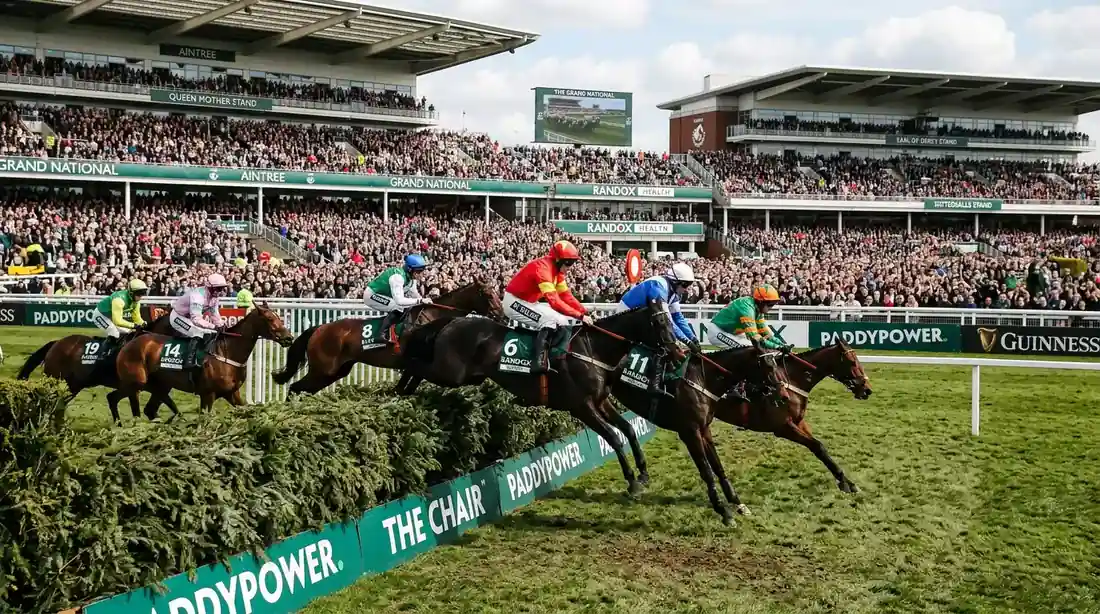
The Grand National is the only horse race where my non-racing friends text me for tips. Every April, people who haven’t placed a bet since last year’s National suddenly want to know which horse to back, as if the race lends itself to casual prediction. The truth is almost the opposite: the Grand National is the hardest race in the calendar to find the winner of, and that’s exactly what makes it the most rewarding when you get it right.
Nearly half of UK adults participate in some form of gambling, and a significant chunk of that activity spikes during Grand National week. The race is a national event as much as a sporting one, generating more betting turnover in a single afternoon than most meetings produce in an entire day.
What Makes the Grand National Unique as a Betting Event
No other race in British racing combines the Grand National’s specific set of challenges. Forty runners over four miles and two furlongs, jumping thirty fences – sixteen of which are unique to Aintree and include obstacles like Becher’s Brook, The Chair, and the Canal Turn. The field size alone makes it statistically unlike any other race: in a typical 12-runner chase, you’re picking one from twelve. Here, you’re picking one from forty.
The handicap element adds further complexity. The National is a handicap chase, meaning weights are assigned based on official ratings, with the top weight carrying around 11 stone 10 pounds and the bottom weight around 10 stone. The weight spread across forty runners creates a vast range of ability levels, and the extreme distance means that raw talent is less decisive than stamina, jumping accuracy, and the ability to travel through a huge, shifting field without getting into trouble.
For the once-a-year punter, the National often feels like a lottery. For the regular racing bettor, it’s a puzzle that rewards specific knowledge: which horses handle the unique Aintree fences, which trainers have a record of preparing National runners, and which profiles historically produce winners.
Form Factors That Matter at Aintree
Grand National form is its own discipline. The factors that matter here overlap with, but are distinct from, those that matter in other staying chases. First and most obviously: jumping ability. The Aintree fences are stiffer and more demanding than standard National Hunt obstacles. A horse that’s a fluent jumper at Cheltenham or Haydock may struggle with the drop fences at Aintree, which require a different technique – jumping out over a ditch rather than up and over a conventional fence.
Previous course experience is disproportionately valuable. Horses that have run well over the National fences before – whether in the National itself or in the supporting races over the same course – have a proven ability to handle the unique obstacles. First-time runners at Aintree face an unknowable risk: they might take to the fences naturally, or they might not.
Stamina is non-negotiable. The Grand National is the longest race in the British calendar, and many horses that stay three miles comfortably find the extra mile and a half beyond them. Look for horses that have won or finished strongly over three miles and beyond, particularly in races run at a genuine pace. Horses that have won staying chases by grinding it out in the final half-mile tend to suit the National better than flashy front-runners who may not sustain the effort.
Weight is the final critical factor. In the modern era, winners have typically carried between 10 stone and 11 stone 5 pounds. Horses at the top of the weights face a statistical disadvantage: carrying 11 stone 10 over four miles and thirty fences is a severe test, and the record shows that top weights win the National far less often than the market suggests.
Each Way Strategy in a 40-Runner Field
The Grand National is the ultimate each way race. With forty runners, bookmakers typically offer each way terms of 1/4 odds for the first four places – and many extend to five or six places through extra place promotions. Betting participation peaks at 7% of the adult population during the spring festival season, and a substantial portion of that participation concentrates on Grand National weekend.
In a field of forty, the probability of any individual horse finishing in the first four or five places is meaningfully higher than its probability of winning. A 25/1 shot has an implied win probability of about 4%, but its implied place probability at 1/4 odds for four places is closer to 15-20%. Each way at 25/1 gives you two bets: one on a low-probability win with a massive return, and one on a higher-probability place with a solid return of around 7/1.
My approach to the National is to back two or three horses each way rather than putting everything on a single selection. The spread captures more of the race’s inherent unpredictability. If one of your selections falls early, the others are still running. If two place and one wins, the combined return can be substantial even from modest stakes.
The each way value is amplified by extra place offers. If a bookmaker extends from four places to six, your 25/1 each way bet suddenly has a place probability closer to 25-30%. Scanning the market for the best extra place terms is one of the most productive things you can do on Grand National morning.
Ante-Post vs Day-of-Race – Timing Your Grand National Bet
Grand National ante-post markets open months in advance, and the early prices can be dramatically bigger than race-day odds. A horse available at 40/1 in January might be 16/1 by April if it runs well in its prep race and the market firms up behind it. The ante-post risk – losing your stake if the horse doesn’t run – is real, but the price differential can be enormous.
The key timing windows for Grand National ante-post betting mirror the trial races. The Becher Chase in December, run over the National fences, is the first serious clue. The Grand National Trial at Haydock in February and the Ultima at Cheltenham in March provide further evidence. Each trial reshapes the market, and the punter who backs a horse before a positive trial result locks in value that evaporates within hours.
Day-of-race betting offers certainty – your horse is running, no non-runner risk – but at compressed prices. The morning market on Grand National day is liquid and competitive, with the major bookmakers fighting for business. Prices can move sharply in the final hour before the race as casual money floods in on high-profile runners. If you’ve done your analysis and identified value at longer prices, the morning of the race is your last chance to get it before the market tightens into the starting price.
How many places pay each way in the Grand National?
Standard each way terms for the Grand National are 1/4 odds for the first four places. However, many bookmakers offer enhanced place terms through promotional offers – commonly five or six places, and occasionally seven or eight. These extra place offers vary by operator and are usually announced in the week before the race. Checking multiple bookmakers for the best place terms is essential for maximising each way value.
What weight has the Grand National winner typically carried?
Modern Grand National winners have typically carried between 10 stone and 11 stone 5 pounds. Winners carrying 11 stone 10 or more are rare in the modern era, though not unprecedented. Statistically, horses in the lower half of the weight range – carrying 10 stone 7 or less – have a better strike rate relative to their market position than top-weighted horses. The extreme distance of four miles two furlongs amplifies the impact of weight.
Published by the Horse Racing Game Betting team.