Betting Exchanges for Horse Racing – How Backing, Laying, and Trading Work
 Available in US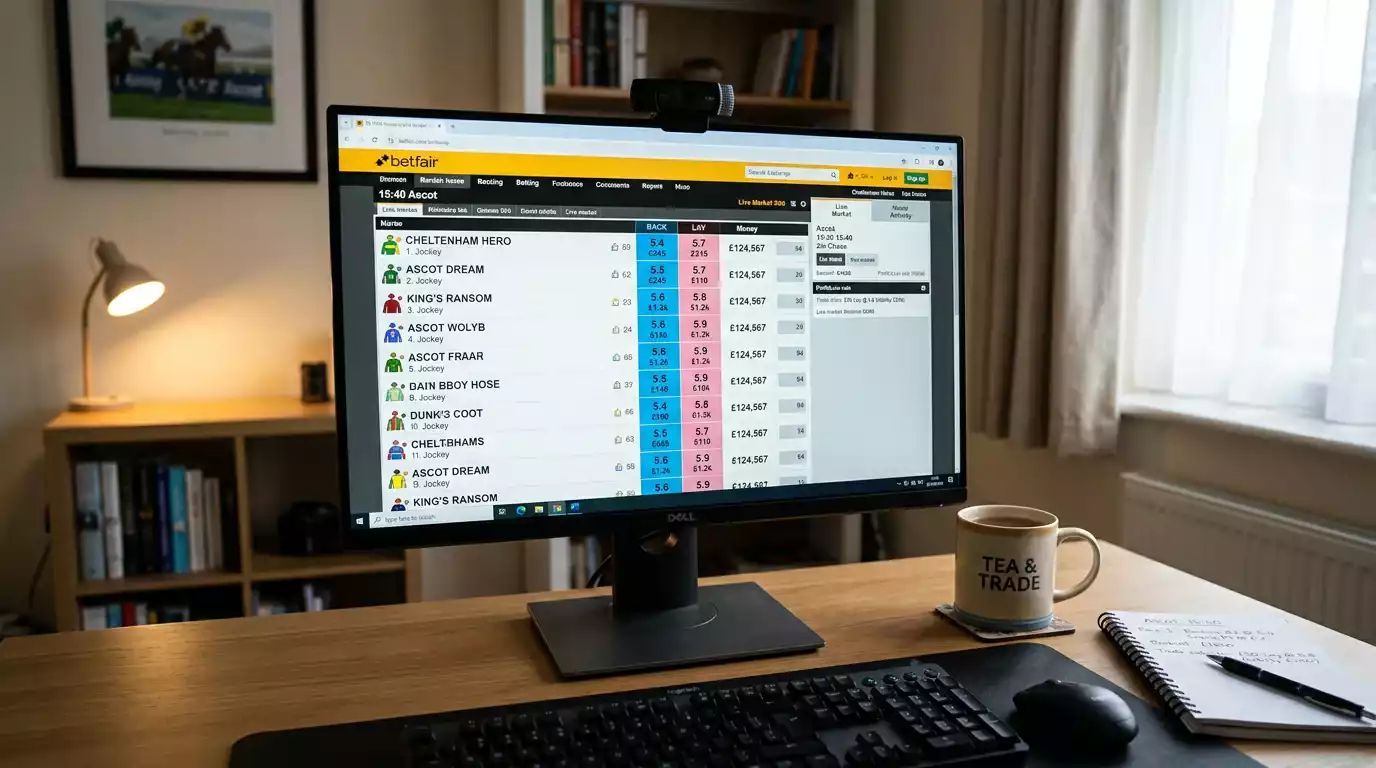
The first time I used a betting exchange, I accidentally laid a horse instead of backing it. I’d clicked the wrong column, and suddenly I was the bookmaker – liable to pay out if the horse won. It did win. The GBP47 that vanished from my account was the most expensive lesson I’ve ever had in horse racing, and also the most valuable. That mistake forced me to understand the mechanics of exchange betting properly, and within a year, the exchange had become my primary tool for horse racing.
Exchange betting is the third model in UK racing, sitting alongside traditional bookmakers and the Tote’s pari-mutuel system. Pari-mutuel accounts for just 5% of UK horse racing turnover; the rest is split between fixed-odds bookmakers and exchanges. Yet many punters have never placed an exchange bet, often because the interface looks intimidating. It’s simpler than it appears, and more powerful than most realise.
Back and Lay – The Two Sides of Every Exchange Bet
A traditional bookmaker offers you odds and takes the opposite side of your bet. An exchange removes the bookmaker entirely and matches you with another punter. Every exchange bet has two parties: one backing a horse to win, and one laying it – betting against it. The exchange is just the platform that brings them together.
When you back a horse on an exchange, it works identically to a normal bet. You stake your money at the available odds, and if the horse wins, you collect your winnings from the person who laid it. When you lay a horse, you’re taking the bookmaker’s role. If the horse loses, you keep the backer’s stake. If the horse wins, you pay out at the agreed odds. Your “liability” – the maximum you’d have to pay – is calculated and held in your account before the bet is matched.
Here’s a concrete example. Horse X is available to back at 5.0 (4/1 in fractional) on the exchange. You back it for GBP10. If it wins, you receive GBP40 profit (5.0 minus 1, times GBP10) from the layer, minus the exchange’s commission. If you instead lay Horse X at 5.0 for GBP10, your liability is GBP40 – the amount you’d owe the backer if the horse wins. If the horse loses, you keep the backer’s GBP10 stake, minus commission.
The ability to lay – to bet against a horse – is what makes the exchange fundamentally different from a bookmaker. With a bookmaker, you can only profit when a horse wins. On an exchange, you can profit when a horse loses, which doubles the number of potential positions you can take on any race.
Commission, Matched Amounts, and Liability
Exchanges charge commission on your net winnings, not on your stake. The standard rate is around 5%, though it varies by platform and can be reduced through loyalty programmes or high-volume trading. On a GBP40 profit, you’d pay GBP2 in commission and net GBP38. If you have a losing day, you pay no commission – it only applies to net profits.
Nevin Truesdale, formerly of the Jockey Club, once observed that the Gambling Commission’s approach seemed designed to reduce gambling to “just small-stakes gamblers.” Exchange betting partly addresses this, because there are no stake limits imposed by a bookmaker – the limit is determined by how much liquidity the market offers. If someone is willing to match your GBP500 lay on a 3/1 shot, you can place it. The exchange doesn’t restrict winners the way bookmakers routinely do.
Liquidity – the amount of money available in the market – is the exchange’s main limitation. On big races at Cheltenham or Ascot, the exchange market is deep, with six-figure sums available at tight spreads. On a Monday afternoon at Plumpton, the market might be thin, with limited amounts available and wider gaps between back and lay prices. This “spread” – the difference between the best available back price and the best available lay price – is your cost of using the exchange. A tight spread means efficient pricing; a wide spread means you’re paying more for the convenience.
In-Running Trading – Green Books and Scratch Bets
Exchange betting’s most powerful application in horse racing is in-running trading – placing bets during the race to lock in profit regardless of the outcome. This is trading in the financial sense: you buy a position (back a horse) and sell it (lay the same horse at a shorter price) when the market moves in your favour.
Say you back a horse at 6.0 before the race for GBP20. During the race, the horse takes a prominent position and its in-running price drops to 3.0 as it looks likely to win. You lay it at 3.0 for GBP40. If the horse wins, your back bet pays GBP100 and your lay bet costs GBP80 – net profit GBP20. If the horse loses, your back bet loses GBP20 and your lay bet wins GBP40 – net profit GBP20. Either way, you’ve locked in GBP20 profit. This is called “greening up” – turning your book green on every outcome.
The alternative is to “scratch” a bet – lay it off at the same price you backed it, eliminating your exposure entirely without profit. Scratching is useful when your pre-race analysis is contradicted by what you see during the race. If a horse you backed is hanging badly right-handed or being outpaced early, scratching allows you to exit the position without waiting for the inevitable losing result.
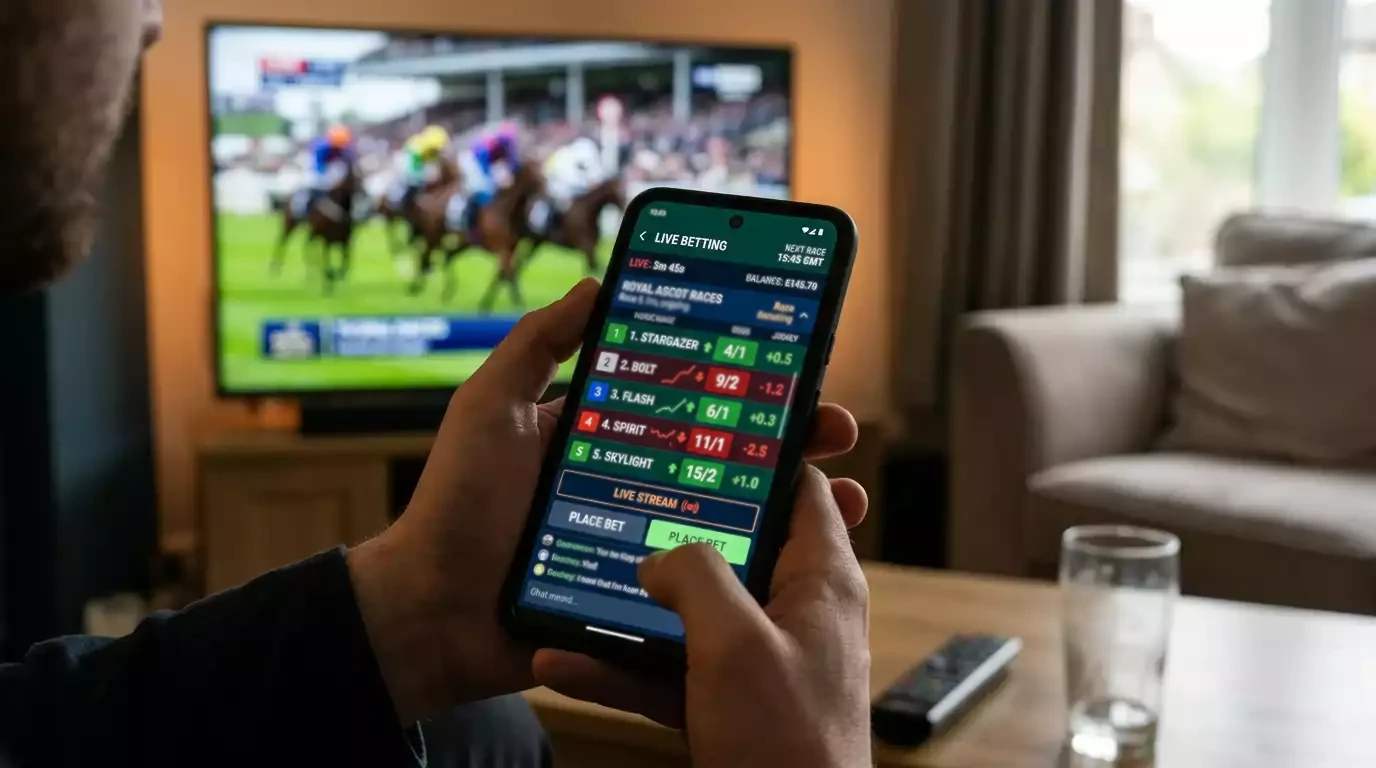
In-running trading requires a different skill set from pre-race betting. You need to read the race visually, understand pace dynamics, and make decisions in seconds. The delay on exchange streams and the speed of in-running price movement mean that amateur traders can easily get caught on the wrong side of a price swing. It’s a skill that improves dramatically with practice, but the learning curve has a financial cost.
Exchange vs Bookmaker – When Each Model Wins
The exchange offers better odds than bookmakers on roughly 70-80% of UK races, because the exchange doesn’t build in a traditional overround. Instead of a 115% book (where the bookmaker’s margin is 15%), exchange markets often run close to 100% – or even under 100% when back and lay prices from different users overlap temporarily. After commission, the effective cost of exchange betting is typically 2-5%, compared to 5-15% with a bookmaker. Remote horse racing betting generated GBP766.7 million in GGY in 2024-25, and exchanges captured a growing share of that total precisely because of this pricing advantage.
Bookmakers win on convenience, promotions, and consistency. A bookmaker gives you a price immediately – you click, you bet. On the exchange, you might need to wait for your bet to be matched, and the amount available might be less than you want. Bookmaker promotions – free bets, enhanced odds, BOG – have no exchange equivalent. And for in-play betting on smaller races, bookmaker markets are often more accessible than thin exchange markets with limited liquidity.
The optimal approach, and the one I use, is to run both. Use the bookmaker for small-to-medium bets where BOG and promotional value compensate for the wider margin. Use the exchange for larger bets where the pricing advantage is worth the commission, for laying horses you think will lose, and for in-running trading on races where you have a genuine edge in reading the action live.
What commission do betting exchanges charge on horse racing?
The standard commission rate is approximately 5% of net winnings, though this varies by platform. Some exchanges offer reduced commission rates of 2-3% for high-volume users or through loyalty programmes. Commission is only charged on winning markets – if you have a net loss on a given market, no commission applies. The commission is deducted automatically from your winnings.
Can I use a betting exchange for each way bets?
Traditional each way betting is not available on exchanges in the same format as with bookmakers. However, you can replicate an each way bet by placing separate back bets in the win market and the place market. Exchanges typically offer both markets for races with sufficient runners. The advantage is that you can choose different stakes for win and place independently, rather than being locked into the equal-stake structure of a traditional each way bet.
Created by the ”Horse Racing Game Betting” editorial team.