Forecast and Tricast Bets in Horse Racing – Predicting the Exact Finish Order
 Available in US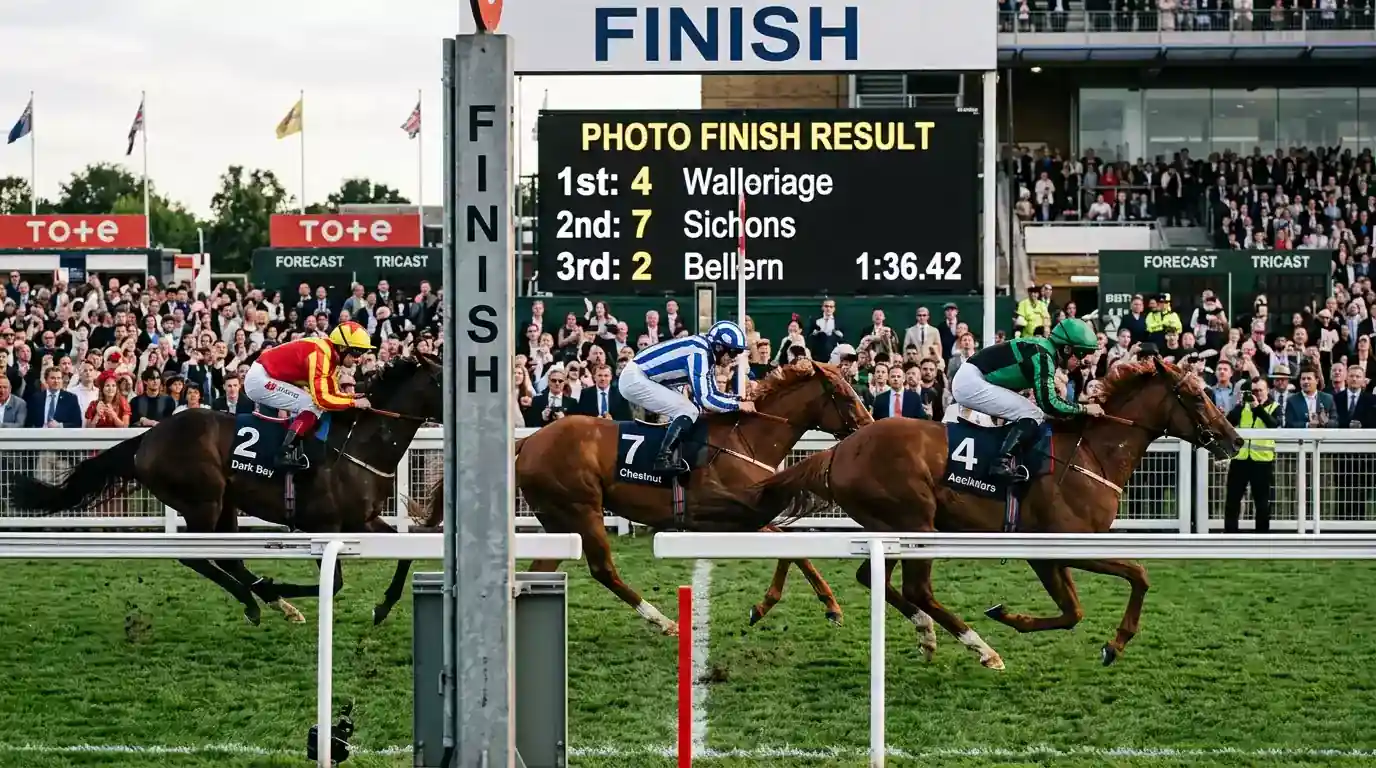
I hit my biggest-ever single payout on a tricast. Three horses in a Class 4 handicap at Newbury, all priced between 6/1 and 12/1, finishing in exactly the order I’d predicted. The Computer Tricast dividend was GBP847 to a GBP1 stake. I’d put GBP2 on it. That afternoon remains the benchmark against which I measure every other bet I’ve placed, and it perfectly illustrates both the appeal and the absurdity of forecast and tricast betting: the returns are extraordinary, the difficulty is extreme, and the satisfaction of landing one is unlike anything else in racing.
Straight and Reverse Forecasts – Exact Order vs Any Order
A straight forecast requires you to predict which horse will finish first and which will finish second, in the correct order. Horse A first, Horse B second. If they finish in reverse order – B first, A second – your bet loses. The odds are not fixed at the time of the bet; instead, a Computer Straight Forecast (CSF) dividend is calculated after the race based on the starting prices of the first two finishers. Favourites win about 33% of UK races, but predicting the exact first and second in the correct order drops the probability dramatically – even when the favourite wins, the second horse could be any of the remaining runners.
A reverse forecast covers both possible finishing orders of your two selections. Horse A first and B second, OR Horse B first and A second. Since it’s two bets in one, your stake is doubled. A GBP1 reverse forecast costs GBP2. The return is the CSF dividend for whichever order they actually finish in. The reverse forecast is the safer option when you believe two horses will fill the first two places but you’re unsure which one will win.
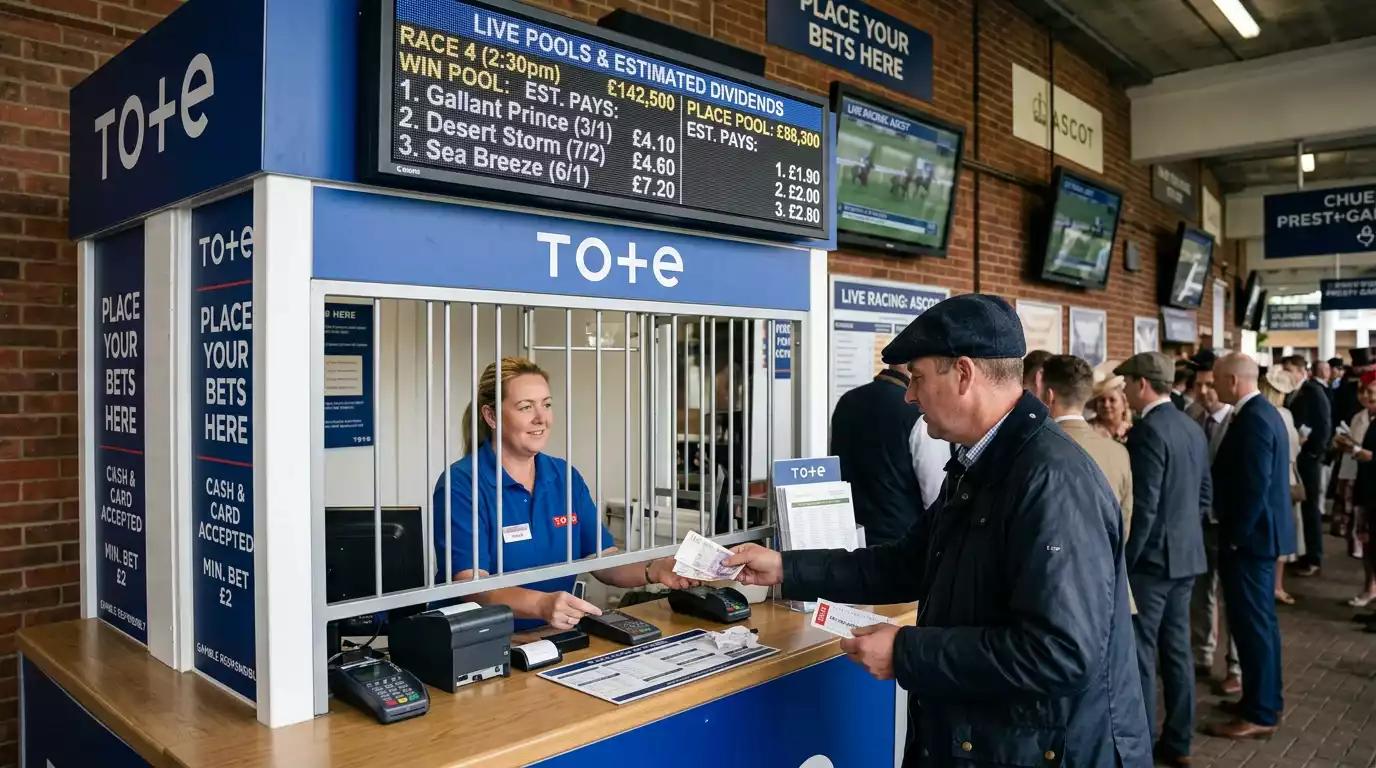
The CSF dividend is calculated using a complex formula that takes into account the starting prices of the placed horses and the number of runners. Broadly, the bigger the prices of the first two home, the bigger the CSF payout. Two outsiders filling the first two places can produce dividends of GBP500 or more to a GBP1 stake. Two short-priced favourites might return GBP5-10. The unpredictability of the payout is part of the appeal – you don’t know exactly what you’ll win until after the race.
Combination Forecasts and Tricasts – All Permutations Covered
A combination forecast extends the reverse forecast concept to more than two selections. If you pick three horses in a combination forecast, you’re covering all possible first-and-second permutations: A-B, A-C, B-A, B-C, C-A, C-B. That’s six bets. Pick four horses and you’ve got twelve permutations, twelve bets. The cost escalates quickly, but so does the coverage.
Tricasts require you to predict the first three finishers in exact order. A straight tricast is a single bet: Horse A first, Horse B second, Horse C third. A combination tricast covers every possible ordering of your three (or more) selections across the first three places. Three horses in a combination tricast gives you six permutations and costs six times your unit stake. Four horses across a combination tricast gives you 24 permutations.
The Computer Tricast dividend works on the same principle as the CSF but incorporates the third-place finisher. Because you’re adding a third variable to an already difficult prediction, tricast dividends are substantially larger than forecast dividends. A tricast involving three mid-priced horses in a competitive handicap regularly pays GBP200-500 to a GBP1 stake. When outsiders fill the frame, four-figure dividends are common.
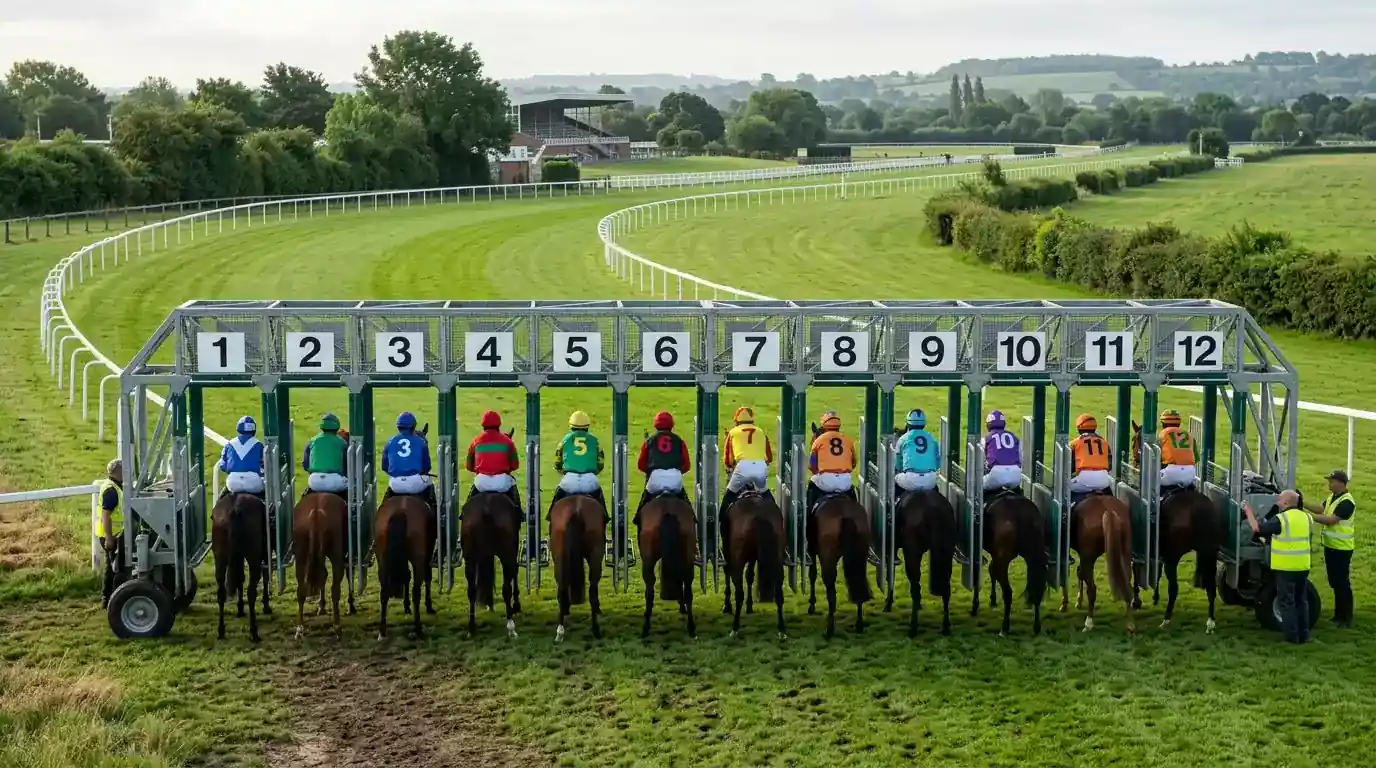
Across the UK’s 59 licensed racecourses, tricasts are available on all handicap races and any race with three or more declared runners (though in practice, small fields produce small dividends). The best tricast value comes from races with 12-20 runners where the form suggests the first three could come from a group of five or six, but the exact order is uncertain.
CSF Payouts – How Computer Forecasts Are Calculated
The Computer Straight Forecast uses a formula developed from the Harville method, which estimates the probability of exact finishing orders based on each horse’s win probability (derived from its SP). The formula assumes that each horse’s probability of finishing second, given it didn’t win, is proportional to its win probability adjusted for the removal of the actual winner. In simple terms: if the favourite wins, the second-favourite’s adjusted probability of being second is the highest, so the CSF payout is lower. When outsiders fill the places, the adjusted probabilities are smaller and the dividend is larger.
There are quirks in the CSF system that experienced punters exploit. Joint or co-favourites can produce artificially low CSF dividends when they fill the first two places, because the formula treats their high probabilities as expected. Conversely, a short-priced favourite winning with an outsider second can produce a surprisingly large CSF because the formula assigns a low adjusted probability to the outsider being second.
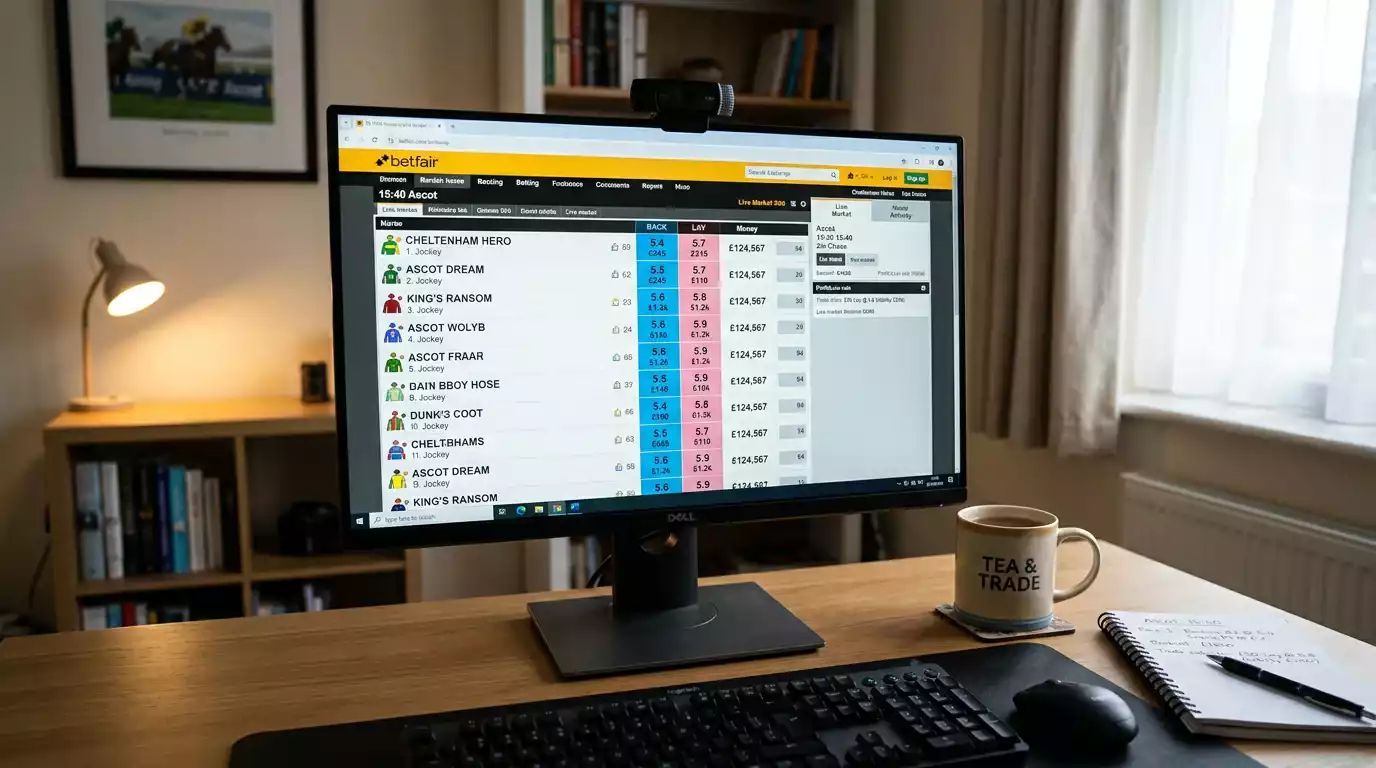
Some bookmakers also offer fixed-odds forecasts – you take a price at the time of the bet rather than accepting the CSF dividend. Fixed-odds forecasts give you certainty: you know exactly what you’ll win before the race. The trade-off is that the fixed odds are typically less generous than the eventual CSF dividend would be, because the bookmaker builds in a margin. I use fixed-odds forecasts when the price offered exceeds my estimate of the true combined probability, and CSF when I expect the dividend to be larger than any fixed price available.
When Forecasts and Tricasts Offer Genuine Value
Forecast and tricast betting is not a strategy for every race. It’s a tool for specific situations where the probable finishing order is more predictable than the market implies. The best opportunities come in small-to-medium fields where the class differential between horses is clear.
In a six-runner novice chase where two horses are clearly superior to the rest, a reverse forecast on those two is a high-probability bet at potentially rewarding odds. The CSF might only pay GBP15-20 to a GBP1 stake, but the probability of landing it could be 15-20% – a positive expected value proposition.
Big-field handicaps are the opposite: the tricast looks tempting because the dividends are massive, but the probability of predicting the exact first three from 20 runners is vanishingly small. Combination tricasts soften this by covering multiple orderings, but the cost of covering five horses in all tricast permutations (60 bets at GBP1 = GBP60 stake) means you need a dividend of at least GBP120 to double your money.
The approach I’ve settled on after years of experimentation: restrict forecasts to races with fewer than ten runners where I can identify a probable first and second, and restrict tricasts to handicaps where I can narrow the likely frame to three or four horses at combined odds that justify the permutation cost. Everything else is entertainment, not strategy.
Can I place a forecast on races with fewer than three runners?
No. Forecast bets require a minimum of three declared runners at the time of the race. If a race is reduced to two runners through withdrawals, forecasts are void and stakes are returned. Tricasts require a minimum of three runners, but in practice, a three-runner tricast has only one possible combination and typically offers poor value.
Is a reverse forecast always twice the stake of a straight forecast?
Yes. A reverse forecast is exactly two straight forecasts combined: one with Horse A first and Horse B second, and one with the order reversed. The stake is always double the unit stake. A GBP1 reverse forecast costs GBP2. There is no way to place a reverse forecast at a single unit stake – it is by definition two bets.
Prepared by the Horse Racing Game Betting editorial staff.