Royal Ascot Betting Guide – Five Days of Flat Racing at the Highest Level
 Available in US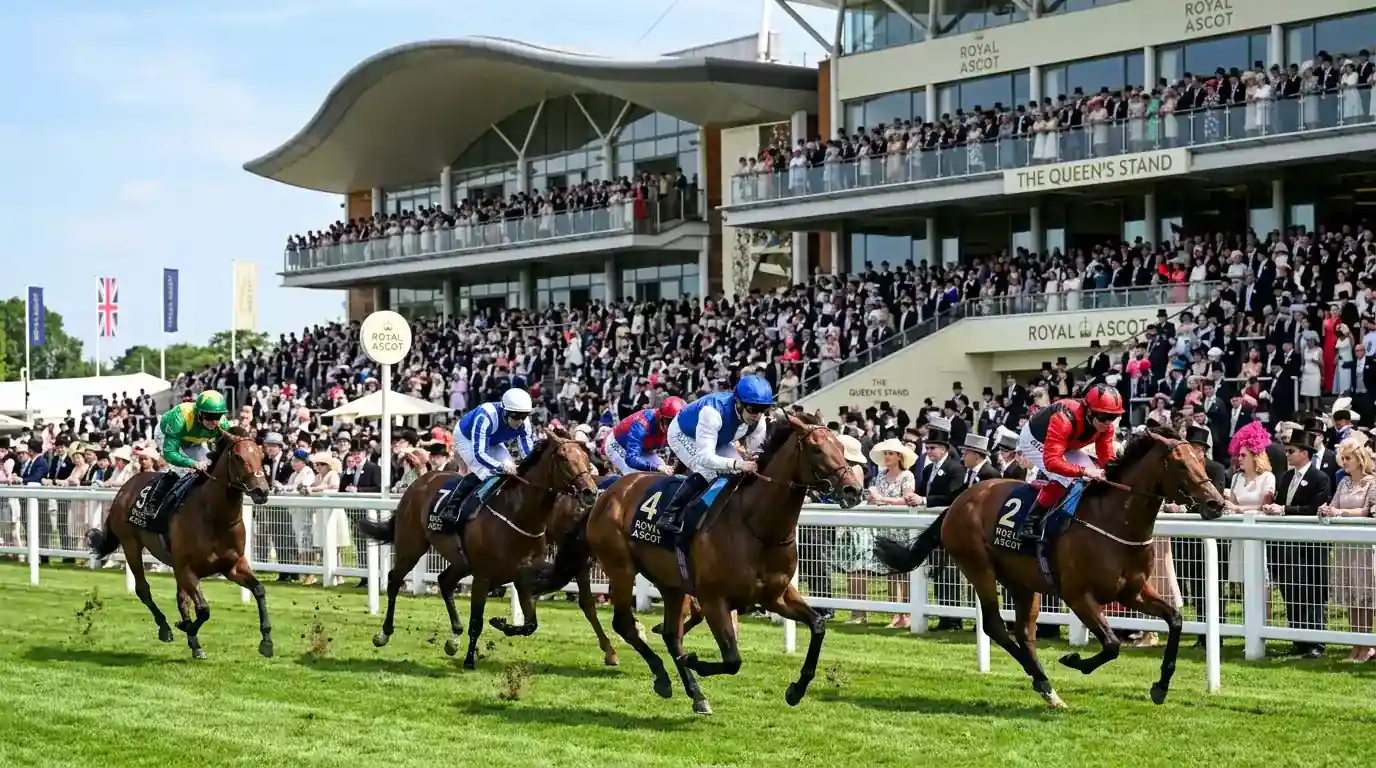
Royal Ascot is the meeting where I learned that everything I knew about draw bias could make or lose me hundreds of pounds in a week. In 2019, I backed three well-handicapped horses in sprint races – all drawn on the wrong side of the track. All three finished in the first four on their side of the field and were beaten by horses on the favoured rail. The form was right, the ground was right, the draw was wrong. At Royal Ascot, the draw isn’t a footnote. It’s a primary variable.
Horse racing is the second most attended sport in the UK after football, and Royal Ascot is its showcase Flat meeting – five days in June that bring together the best Flat racehorses from Britain, Ireland, France, Australia, Japan, and America. For the punter, it’s both an opportunity and a minefield.
The Five Days and Key Races
Each day of Royal Ascot features at least one Group 1 race and a supporting cast of handicaps that attract fields of 20 or more runners. Tuesday opens with the Queen Anne Stakes over a mile and the King’s Stand Stakes – a five-furlong sprint that launches the week at breakneck speed. The Coventry Stakes, for two-year-olds, often produces the first ante-post market movement for the following year’s 2000 Guineas.
Wednesday’s feature is the Prince of Wales’s Stakes, a mile-and-a-quarter Group 1 that frequently pits classic winners against older horses. Thursday centres on the Gold Cup – two and a half miles of staying drama, the race that defines the week for many. It’s the Flat equivalent of the Cheltenham Gold Cup, testing stamina to the extreme. Friday and Saturday complete the card with the Commonwealth Cup (three-year-old sprinters), the Coronation Stakes (fillies’ mile), and the Diamond Jubilee Stakes (senior sprinters).
The handicaps are where the serious betting happens. The Royal Hunt Cup, the Wokingham, the Britannia – these are cavalry charges with 20-30 runners, each way territory by default, and the draw plays a role that doesn’t exist in the Group races. Racecourse attendance across British racing hit 5.031 million in 2025, and a substantial slice of that figure concentrates at Ascot during its Royal meeting.
Draw Bias at Ascot – When Stall Numbers Decide Races
Ascot’s straight course – used for races up to a mile – is where draw bias becomes a betting factor that overrides form. Depending on the ground conditions and the positioning of the running rail, a pronounced advantage can develop on one side of the track. In some years, low draws (stalls nearest the stands rail) dominate the sprint races. In others, high draws on the far side are favoured. The bias can shift between days within the same meeting if the ground changes or the rail is moved.
The bias arises from two factors: the natural camber of the track and the position of the freshest ground. When the rail is placed on the stands side, the ground near the rail is often better preserved (less used in earlier races), giving low-drawn horses an advantage. When the rail is on the far side, the advantage flips. Ascot’s clerks communicate rail positions in advance, which is your starting point for assessing draw impact.
In the big sprint handicaps – the Wokingham and the Palace of Holyroodhouse – the draw can be decisive. I’ve seen horses finish first and second in their group, beaten overall only by horses drawn on the favoured side. If you’re backing a 14/1 shot each way in the Wokingham, check the draw first. A good horse in a bad draw is a poor bet; a fair horse in a perfect draw becomes a live each way contender.
International Raiders and Their Impact on the Market
Royal Ascot attracts runners from outside Britain and Ireland in numbers that no other UK Flat meeting matches. French-trained runners, particularly from Andre Fabre and the Aga Khan operation, target specific Ascot races annually. Australian sprinters have made an increasing impact in the sprint races, and Japanese runners have begun appearing in the Group 1 events with growing success.
International runners distort the market in interesting ways. British and Irish punters tend to be less familiar with the form of overseas raiders, which means the market can underprice or overprice them depending on media coverage. A French horse with sparkling Paris form might be dismissed because UK punters can’t easily assess French form, creating value for those who can. Conversely, a high-profile Australian sprinter might attract disproportionate market support based on reputation rather than suitability to Ascot’s unique course.
The going is critical for international visitors. European raiders are accustomed to decent ground; soft or heavy conditions at Ascot can undermine them. Australian sprinters run on fast tracks and may struggle if the June weather produces rain. When assessing international runners, weigh their domestic form against the conditions they’ll encounter at Ascot – not just the distance and class, but the ground, the draw, and the pace dynamic of a large-field British race.
Handicaps at Royal Ascot – The Punter’s Playground
If the Group races are the sporting centrepiece of Royal Ascot, the handicaps are the betting centrepiece. Fields of 20-30 runners at prices from 6/1 to 50/1, with competitive weights and each way terms of 1/4 odds for four places – these are the races where value seekers and form students earn their annual return.
The Royal Hunt Cup (mile handicap) and the Wokingham (six-furlong sprint handicap) are the two most bet-on handicaps of the week. Both attract enormous ante-post interest, and the prices move significantly between declarations and the off. The market is informed but not infallible – in a 30-runner handicap, there’s simply too much uncertainty for the market to price every runner correctly.
My approach to Ascot handicaps is straightforward: identify the draw bias for the day, eliminate horses on the wrong side, then apply standard form analysis – going preference, distance suitability, recent trajectory – to the remaining runners. This process typically narrows a 25-runner field to five or six genuine contenders, and from those, one or two will stand out at a price that represents genuine value. That narrowing process is where the edge lives.
Is Royal Ascot only Flat racing?
Yes. Royal Ascot is exclusively a Flat racing meeting. There are no hurdle or steeplechase races. The meeting takes place in June, during the peak of the Flat turf season, and features races from five furlongs to two and a half miles. National Hunt racing is not part of the Ascot Royal meeting programme.
How important is the draw in Royal Ascot handicaps?
The draw is extremely important in Royal Ascot handicaps run on the straight course, particularly sprint and mile races. In some years, the draw advantage is so strong that horses on the unfavoured side of the track have almost no chance of winning regardless of their ability. The bias depends on ground conditions, rail position, and the going, and it can change between days of the meeting. Always check the draw before backing a runner in an Ascot straight-course handicap.
Written by the editors at Horse Racing Game Betting.