Horse Racing Handicap Betting – Weights, Ratings, and Finding the Well-Handicapped Horse
 Available in US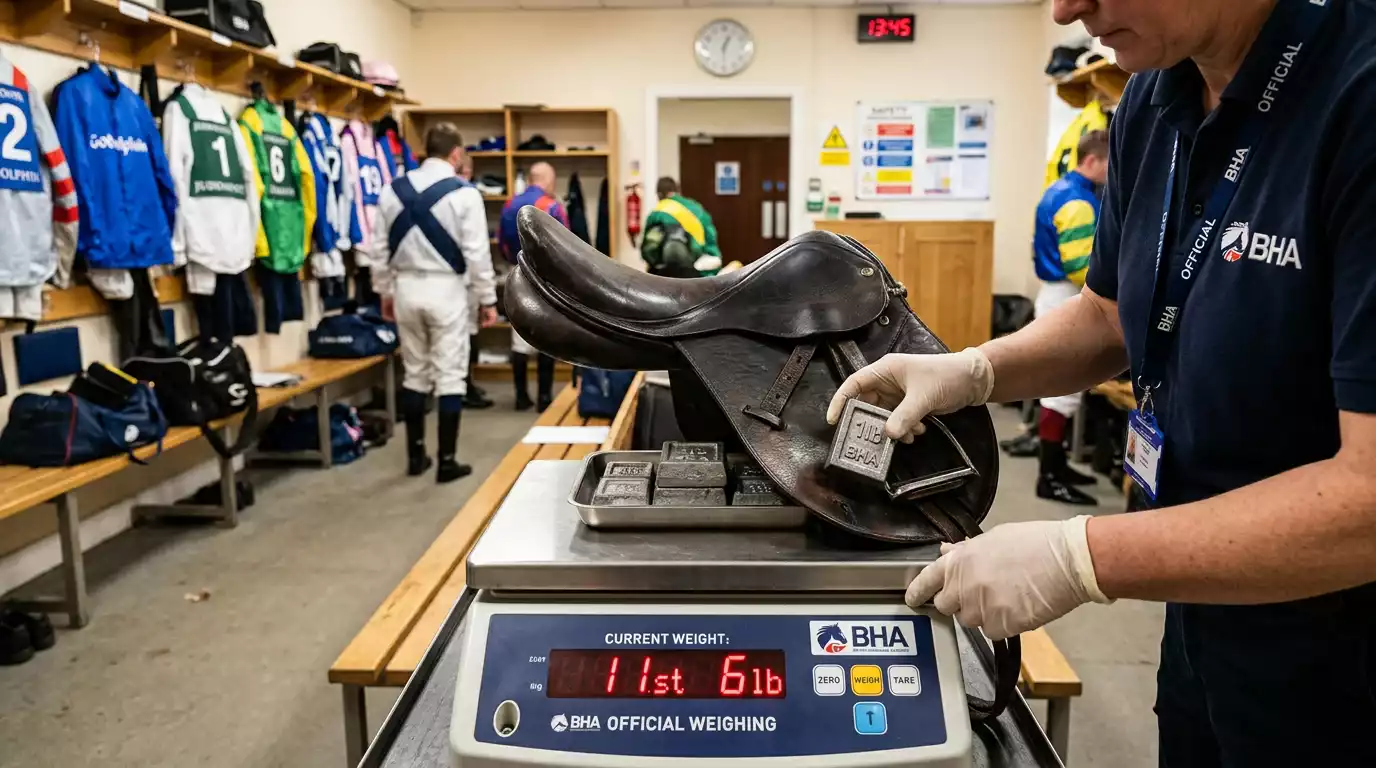
The first time I properly studied a handicap race – not just glanced at the form, but actually worked through the ratings, the weight assignments, the recent trajectory of each runner – I backed a horse that was rising through the ranks after two impressive wins. It carried top weight, ran a good race, but finished third. The winner was a lightly raced four-year-old near the bottom of the weights with a rating twelve pounds lower. That was the day I understood that handicap betting isn’t about finding the best horse. It’s about finding the horse whose official rating hasn’t caught up with its actual ability.
How the BHA Handicapper Assigns Weights and Ratings
The British Horseracing Authority employs a team of handicappers whose job is, in theory, to make every horse in a handicap race have an equal chance of winning. They do this by assigning each horse an official rating – a number that represents its assessed ability – and then converting those ratings into weight allocations. The higher the rating, the more weight the horse carries. A horse rated 100 carries more weight than a horse rated 85, and the difference in weight is designed to equalise the difference in ability.
Every pound of weight carried is worth approximately one length over a mile. If Horse A is rated 10 pounds higher than Horse B, the handicapper is saying that Horse A is roughly ten lengths better at level weights. By giving Horse A ten extra pounds to carry, the two should, in theory, cross the line together. With 21,728 horses in training across the UK in 2025, the handicapping system processes thousands of reassessments every week, adjusting ratings after each run based on the horse’s performance relative to expectations.
Ratings are not static. A horse that wins impressively will have its rating raised – sometimes by as many as seven or eight pounds after a convincing victory. A horse that runs poorly may have its rating lowered, or left unchanged if the handicapper judges the performance as uncharacteristic. The adjustment process is where the value lies for punters: the handicapper’s assessment is inherently backward-looking, based on what has already happened, while the horse’s actual ability might be moving in a direction the rating doesn’t yet reflect.
Reading the Handicap – What Top Weight and Bottom Weight Mean
In any handicap race, the horse with the highest official rating carries the most weight and is described as “top weight.” The horse with the lowest rating carries the least and is “bottom weight.” The spread between them – often 20-30 pounds in a big handicap – represents the handicapper’s view of the ability range in the field.
Top weight isn’t synonymous with favourite. A top-weighted horse is the highest rated in the race, but its odds reflect the fact that it’s carrying the most weight. Sometimes the market judges a lower-weighted horse as more likely to win because its lighter burden more than compensates for its theoretical ability deficit. This is one of the paradoxes of handicap betting: the “best” horse in the race often isn’t the best bet.
The key number to focus on isn’t the weight itself but the horse’s rating relative to the class of the race. Every handicap has a ratings band – for example, 0-105 or 0-135. A horse rated 95 running in a 0-105 handicap is near the top of the band and carries significant weight. The same horse in a 0-135 race is near the bottom and carries much less. Class is relative, and the same horse can be top weight in one race and bottom weight in another depending on where it’s entered.
Spotting the Well-Handicapped Horse – Three Signals
Finding a well-handicapped horse – one whose current ability exceeds its official rating – is the holy grail of handicap betting. Favourites win about 33% of all races, but in handicaps specifically, the favourite strike rate drops because the weight system compresses the field. The horse the market likes most doesn’t have the built-in advantage it would in a non-handicap race. This creates space for value at bigger prices.
The first signal is improvement trajectory. A horse that has run three times and improved with each run – finishing sixth, then third, then second – is on an upward curve. Its rating has been raised after each run, but if the improvement is continuing faster than the handicapper can adjust, it’s ahead of its mark. This is particularly common with younger horses (three and four-year-olds) who are still physically developing.
The second signal is a change of conditions. A horse that has been running on ground it dislikes, or at a distance that’s too short, or at a track that doesn’t suit – and is now switched to conditions that match its profile – can outrun a rating based on those unflattering performances. The handicapper rates what the horse has done; a switch to preferred conditions can unlock ability the form figures don’t show. Richard Wayman, the BHA’s Director of Racing, has acknowledged that total betting turnover fell 9% year-on-year in Q1 2025, yet handicap races remain the bread and butter of the fixture programme and the market where most punting money is wagered.
The third signal is time off the track. A horse returning from a break of two or three months may have been freshened up, had a physical issue resolved, or simply benefited from a rest. Its rating reflects what it did before the break, but if it comes back improved, the rating is stale. Trainers known for improving horses over a break are worth following closely in handicaps.
Handicap Betting Strategy Across Different Class Levels
Not all handicaps are equal, and your approach should shift depending on the class. Low-grade handicaps – Class 5 and 6 – feature horses of moderate ability and inconsistent form. The ratings in these races are less reliable because the horses are less predictable, and results often hinge on the day rather than the data. These races are hard to profit from consistently.
Heritage handicaps – the big Saturday races at Class 2 and above, like the Lincoln, the Ebor, the Cambridgeshire – are a different proposition entirely. The fields are large, the horses are better quality, and the form is more reliable. The market is also more efficient, which means finding value requires deeper analysis. But when you do find a well-handicapped horse at 14/1 or 16/1 in a heritage handicap, the return justifies the work.
The sweet spot for consistent handicap betting, in my experience, sits at Class 3 and 4. The horses are good enough to produce repeatable form, the handicapper’s adjustments are close to accurate but not perfect, and the market is less efficient than at the top level. Bettors who specialise in these middle-tier handicaps and develop genuine knowledge of the horses and trainers involved can build a meaningful edge over time – an edge that becomes harder to find in either the lowest or highest classes of competition.
How often does the BHA reassess a horse’s handicap rating?
The BHA handicapper reassesses a horse’s rating after every run in a handicap race. Adjustments are published within 48 hours of the race and can range from no change to an increase or decrease of several pounds. Horses that win impressively typically receive the largest increases. Ratings for horses that have not run recently remain unchanged until their next race.
What is a long handicapper?
A long handicapper is a horse whose official rating is perceived to be too high relative to its current ability. This usually happens when a horse has won or run well in the past but has declined in form or is returning from injury. The inflated rating means it carries more weight than its current ability justifies, making it a poor bet in handicaps until the handicapper eventually lowers the mark after a series of poor performances.
Published by the Horse Racing Game Betting team.